
Plumbing Basics Every Homeowner Should Understand
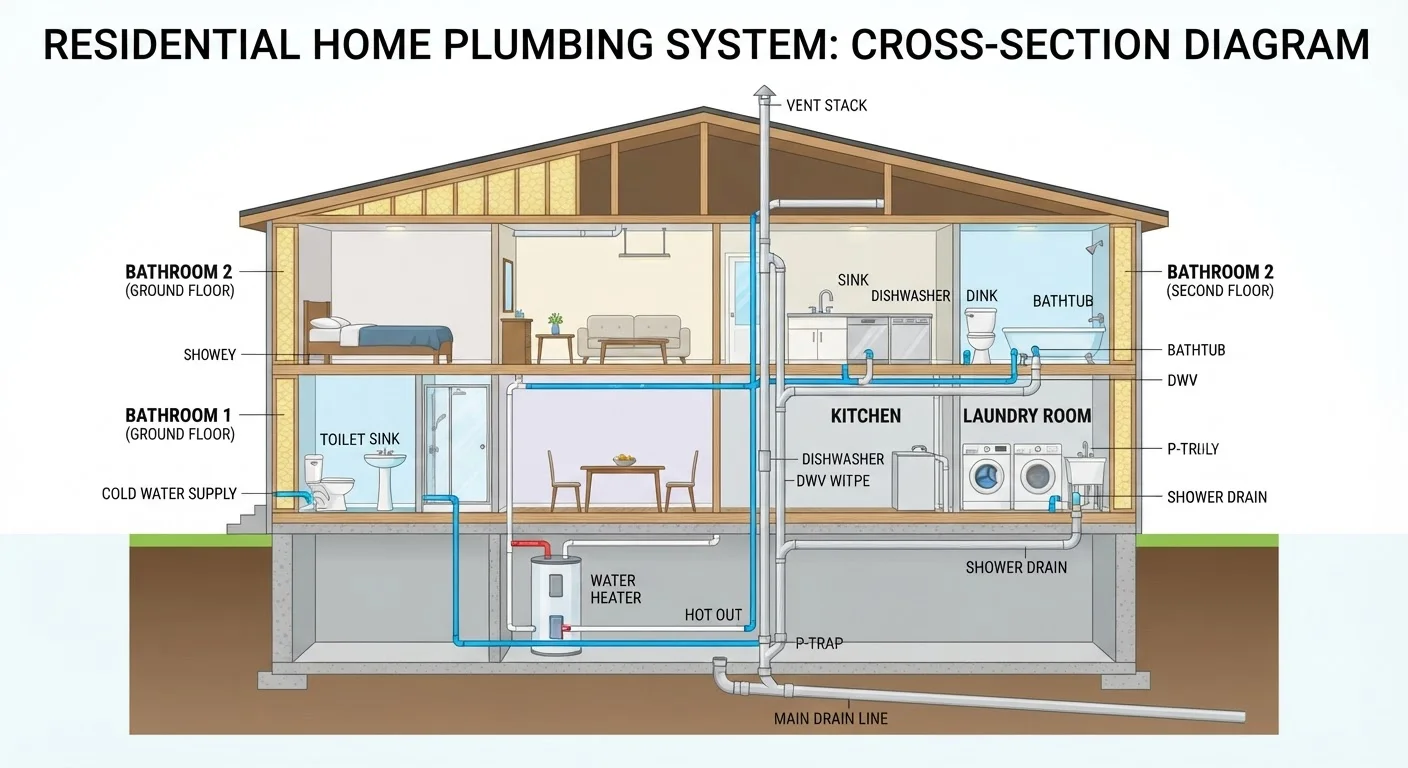
Photo credit: ResultsRover.com | Insights You Can Trust
In this article
A ground-up introduction to how residential plumbing works, what the main shutoffs do, and which minor issues you can address yourself.
Key Takeaways
- Residential plumbing has two separate systems: one brings fresh water in, the other carries wastewater out.
- Knowing where your main shutoff valve is can prevent thousands of dollars in water damage during an emergency.
- Many minor issues - dripping faucets, running toilets, slow drains - are manageable DIY tasks.
- Any work involving gas lines, main sewer lines, or permits should always go to a licensed professional.
- Routine awareness and small fixes protect your home's value and keep repair costs predictable.
How Residential Plumbing Works
Your home's plumbing is actually two systems working side by side. The supply system delivers pressurized fresh water from the municipal main (or a private well) to every faucet, appliance, and fixture. The drain-waste-vent (DWV) system relies on gravity - not pressure - to carry used water and waste to the sewer or septic tank.
Supply system
The network of pressurized pipes that delivers fresh, clean water from the municipal main or a well to every fixture and appliance in your home.
Drain-waste-vent (DWV)
The system of wider, gravity-fed pipes that carries used water and waste out of your home, plus vent pipes that keep the flow moving and prevent sewer-gas buildup.
Main shutoff valve
A single valve that controls all water entering your home. Closing it immediately stops water flow to every fixture - essential during a burst pipe or major leak.
Flapper
The rubber seal at the bottom of a toilet tank. When it wears out or warps, water continuously leaks from the tank into the bowl, causing the toilet to run.
Aerator
A small mesh screen screwed onto the tip of a faucet spout. It mixes air into the water stream to reduce splashing, and can clog with mineral deposits over time.
Pressure-reducing valve (PRV)
A device installed where the main supply enters the home to regulate water pressure to a safe range. A failing PRV can cause whole-home low pressure.
These two systems never mix. Supply pipes are typically copper, CPVC, or PEX tubing. Drain pipes are wider, slope slightly downward, and are usually ABS or PVC plastic in homes built or replumbed after the 1970s. A third element - vent pipes - runs upward through walls and exits through the roof. Vents allow air into the drain system so water flows freely and prevent sewer gases from backing into living spaces.
Knowing this layout helps you interpret what you see under a sink or inside a wall. For a broader look at how all your home's systems connect, see The Complete Guide to Maintaining a Home You Actually Own.
Finding and Using Your Shutoff Valves
The single most valuable piece of plumbing knowledge for any homeowner is the location of the main shutoff valve. Turning it off stops all water flow into the house within seconds - a critical ability during a burst pipe or major leak.
- Main shutoff: Usually near the water meter - check the basement, utility room, crawl space, or an exterior wall facing the street.
- Fixture shutoffs: Small oval or straight-handle valves sit behind toilets and under sinks. Each controls only that fixture.
- Appliance shutoffs: Washing machines, dishwashers, and water heaters have dedicated valves on their supply lines.
Do a Shutoff Valve Check Once a Year
Walk through your home annually and briefly operate every fixture shutoff valve - turn it off, then back on. This keeps valves from seizing and confirms each one actually stops water flow. Add it to a seasonal home maintenance checklist so it doesn't get overlooked.
Turn the main shutoff valve slowly and fully to confirm it still operates freely. Valves that haven't moved in years can seize or fail to close completely. If yours is stiff or won't close all the way, a licensed plumber can replace it at low cost - far cheaper than the water damage a stuck valve could allow.
Minor Issues You Can Handle Yourself
Many routine plumbing tasks don't require specialized training. Tackling them yourself can save meaningful money over time - money that stays in your household budget rather than going to service calls. These are the issues most homeowners can safely address:
- Dripping faucet
- Usually caused by a worn washer or O-ring inside the faucet handle. Shutting off the fixture supply valve, disassembling the handle, and swapping the washer resolves most drips.
- Running toilet
- Lift the tank lid and observe the flapper and fill valve. A warped flapper is the most common culprit and is inexpensive to replace.
- Slow or clogged drain
- A cup plunger (for sinks and tubs) or a hand-cranked drain snake clears most hair and soap-scum blockages without chemicals. Avoid pouring boiling water down drains - it can soften PVC fittings. (This is one of several home maintenance myths that quietly cost homeowners money.)
- Clogged aerator
- Unscrew the aerator from the faucet tip, rinse away mineral buildup under running water, and reinstall. This restores flow in minutes.
When to Call a Licensed Plumber
Recognizing the limits of DIY work is just as important as knowing what you can handle. Some plumbing situations involve safety risks, significant structural exposure, or local permit requirements that make professional involvement necessary - not optional.
Don't Skip Permits on Major Work
It may be tempting to skip the permit process to save time, but permitted work is inspected for safety and code compliance. Unpermitted plumbing can void homeowners insurance coverage related to that work and create legal complications at resale. Always verify what your local jurisdiction requires before breaking into walls or replacing major fixtures.
Always hire a licensed plumber for:
- Any work involving gas lines connected to water heaters or appliances
- Main sewer line blockages or damage
- New pipe runs or changes to the existing layout
- Water heater replacement (permit often required)
- Suspected slab leaks (water escaping beneath a concrete foundation)
- Low pressure affecting the whole house when the shutoff is fully open
Before starting any significant project, check with your local building department about permit requirements. Unpermitted work can complicate homeowners insurance claims and create obstacles when you eventually sell. Pairing smart plumbing upkeep with sound financial habits - like budgeting for a small annual home maintenance fund - keeps both your pipes and your finances in good shape. See our household budgeting guide for practical ways to build that cushion.
Frequently Asked Questions

Author
Home & Garden Editorial Team
Home & Garden Editorial Team is the collective byline for our editorial team and contributor network. Articles published under this byline or an editorial pen name are researched, written, and reviewed according to our editorial standards for clarity, consistency, and independence before publication.
View all articles →