
Decoding a Home Improvement Estimate: Line by Line
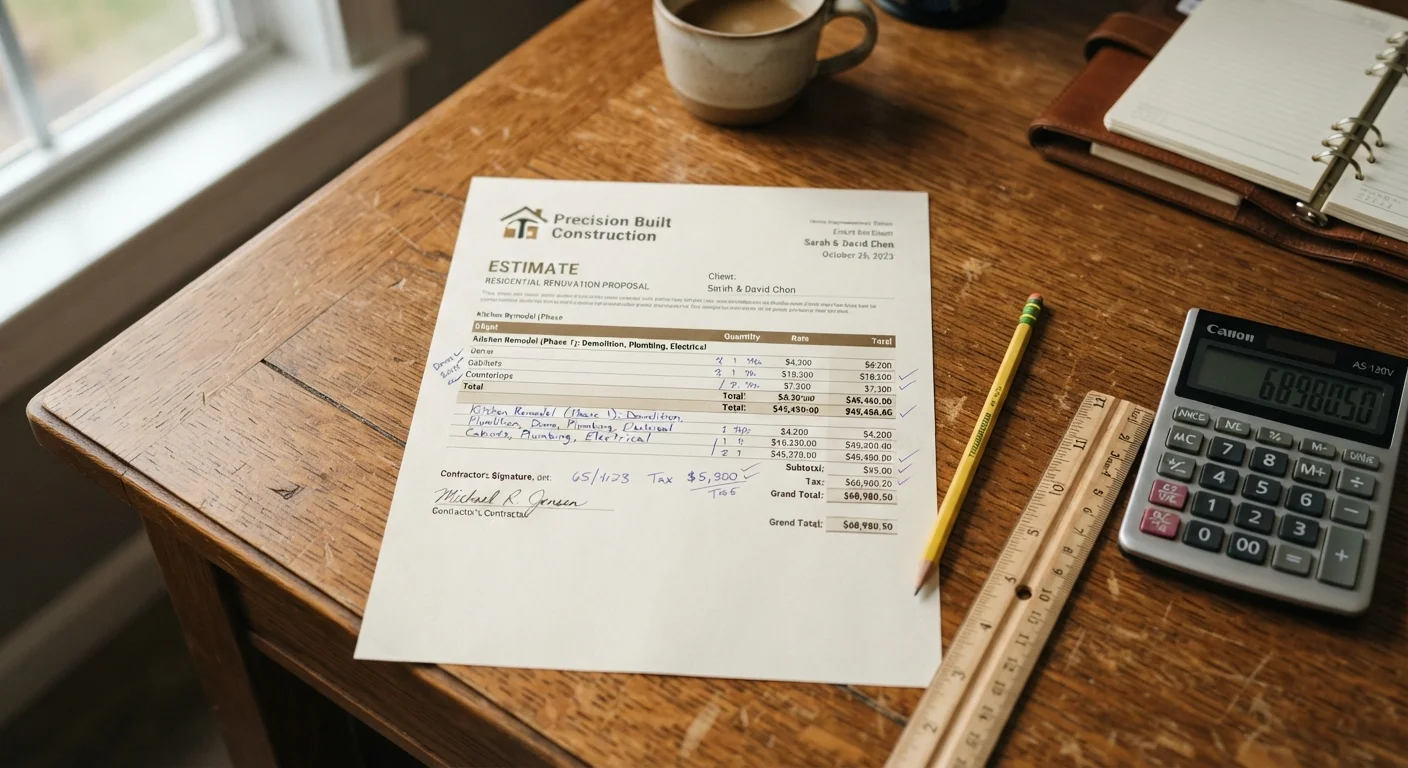
Photo credit: ResultsRover.com | Insights You Can Trust
In this article
Contractor quotes can be confusing. This breakdown explains common line items, markup, allowances, and what to ask before you sign anything.
Why Contractor Estimates Are Hard to Read
A home improvement estimate is part quote, part contract proposal, and part negotiating document - all at once. Contractors format them differently, use inconsistent terminology, and may bury important assumptions in fine print. Before you sign anything, understanding the structure of an estimate is one of the most effective ways to protect your budget.
For a broader look at how a project comes together from planning through completion, see the full project planning guide. This article focuses specifically on what each line item means and what questions to ask.
| Recommended estimates to collect | At least 3 written quotes per project |
| Typical contractor markup on materials | 10%-30% (General industry range; varies by region and trade) |
| Standard contingency reserve | 10%-15% of total project cost |
| Deposit amount (general guidance) | No more than 10%-33% upfront (Some states legally cap contractor deposit amounts) |
| Permit responsibility | Contractor typically pulls permits; cost is passed to homeowner |
| Payment schedule type | Milestone-based payments preferred over lump-sum upfront |
The Core Line Items - Defined
Most residential estimates are organized around three cost categories. Knowing what each covers helps you evaluate whether a quote is complete and whether the numbers make sense.
Labor
This is the cost of time on the job. It may be listed as a flat amount per task ("Install hardwood flooring - $800") or as an hourly rate multiplied by estimated hours. Ask the contractor which trades are included and whether subcontractors are covered in this line or billed separately.
Materials
Materials are often listed at a marked-up price, not the contractor's actual cost. A markup of 10-30% is standard and covers handling, waste, and overhead - it's legitimate, but you should know it's there. If the estimate lists materials at cost, verify whether a separate markup line appears elsewhere.
Allowances
Allowances are placeholders for items you haven't chosen yet, such as light fixtures, tile, or appliances. They are one of the most common sources of budget overruns. If the allowance is $200 per fixture and you choose one that costs $350, you owe the difference plus markup. Always ask: "What is this allowance based on, and can I see examples at that price point?"
Allowance
A placeholder dollar amount a contractor sets for a material or fixture that hasn't been selected yet. If your actual choice costs more than the allowance, you pay the difference.
Markup
A percentage added to the cost of materials or subcontractor labor to cover overhead and profit. Typical contractor markup ranges from 10% to 30%, though this varies by region and project scope.
Contingency
A budget reserve - often 10-15% of the total project cost - set aside to cover unexpected conditions such as rotted framing, outdated wiring, or other hidden issues discovered mid-project.
Scope of Work
A written description of exactly what the contractor agrees to do, specifying tasks, materials, and boundaries. A vague scope of work is one of the most common causes of disputes and cost overruns.
Change Order
A formal, signed amendment to the original contract that authorizes additional work or changes, along with any cost adjustment. Work should never begin on additions without a signed change order.
Lump Sum Bid
A single fixed price for the entire project. The contractor assumes risk if costs run high, but you have less visibility into individual cost components.
Time and Materials (T&M)
A billing method where you pay for actual hours worked plus the cost of materials. It provides transparency but shifts cost-overrun risk to you.
Subcontractor
A specialized trade professional (electrician, plumber, tile setter) hired by your general contractor. Their costs typically appear as line items, often with the contractor's markup applied.
Lines That Are Easy to Overlook
Several line items appear on estimates that homeowners frequently misread or skip past.
Permits and Inspections
The cost of required building permits should appear as a line item. If it's missing, ask directly whether permits are included in the scope of work. Skipping this question has caught many homeowners off guard at the final invoice.
Permits Are Part of the Project Cost
Building permits are not optional extras - they are legally required for most structural, electrical, plumbing, and HVAC work. Your contractor should obtain them, and their cost will appear in the estimate. Never let a contractor suggest skipping permits to save money; unpermitted work can create serious problems when you sell or make an insurance claim.
Contingency
A well-organized estimate will include a contingency reserve of 10-15% of total project cost. If a contractor doesn't include one, build it into your own budget. Renovation work regularly uncovers surprises - rotted subfloor, outdated wiring, inadequate insulation - that require additional work and cost.
Cleanup and Disposal
Dumpster rental, hauling fees, and end-of-project cleanup are legitimate costs. Confirm whether they're included or whether you'll be invoiced separately.
For context on which projects tend to deliver long-term value, see what ROI actually means for home upgrades before committing to a large scope of work.
Questions to Ask Before You Sign
An estimate is an invitation to ask questions - not a take-it-or-leave-it document. Here are the most important ones:
- Is this a fixed price or an estimate? Understand whether the number can increase and under what conditions.
- What triggers a change order? Get the contractor's process for authorizing additional work in writing.
- Are all subcontractors included? Ensure electrical, plumbing, and HVAC work appear in the quote, not as future surprises.
- What's the payment schedule? Milestone-based payments (tied to completed phases) protect you better than large upfront sums.
- What's not included? Ask for an explicit list of exclusions. This single question has saved homeowners significant money.
Comparing quotes is easier when you understand the language. The same critical reading skills apply to other documents too - the guide to reading auto repair estimates covers similar principles in a different context. And if you want to build the project into a realistic household plan, budgeting basics is a solid starting point.
This article provides general educational information about contractor estimates and is not a substitute for legal or financial advice specific to your situation. Requirements, norms, and regulations vary by state and municipality - always verify local permit and licensing requirements before starting any home project.

Author
Home & Garden Editorial Team
Home & Garden Editorial Team is the collective byline for our editorial team and contributor network. Articles published under this byline or an editorial pen name are researched, written, and reviewed according to our editorial standards for clarity, consistency, and independence before publication.
View all articles →