
Reading a Repair Estimate Without Getting Lost
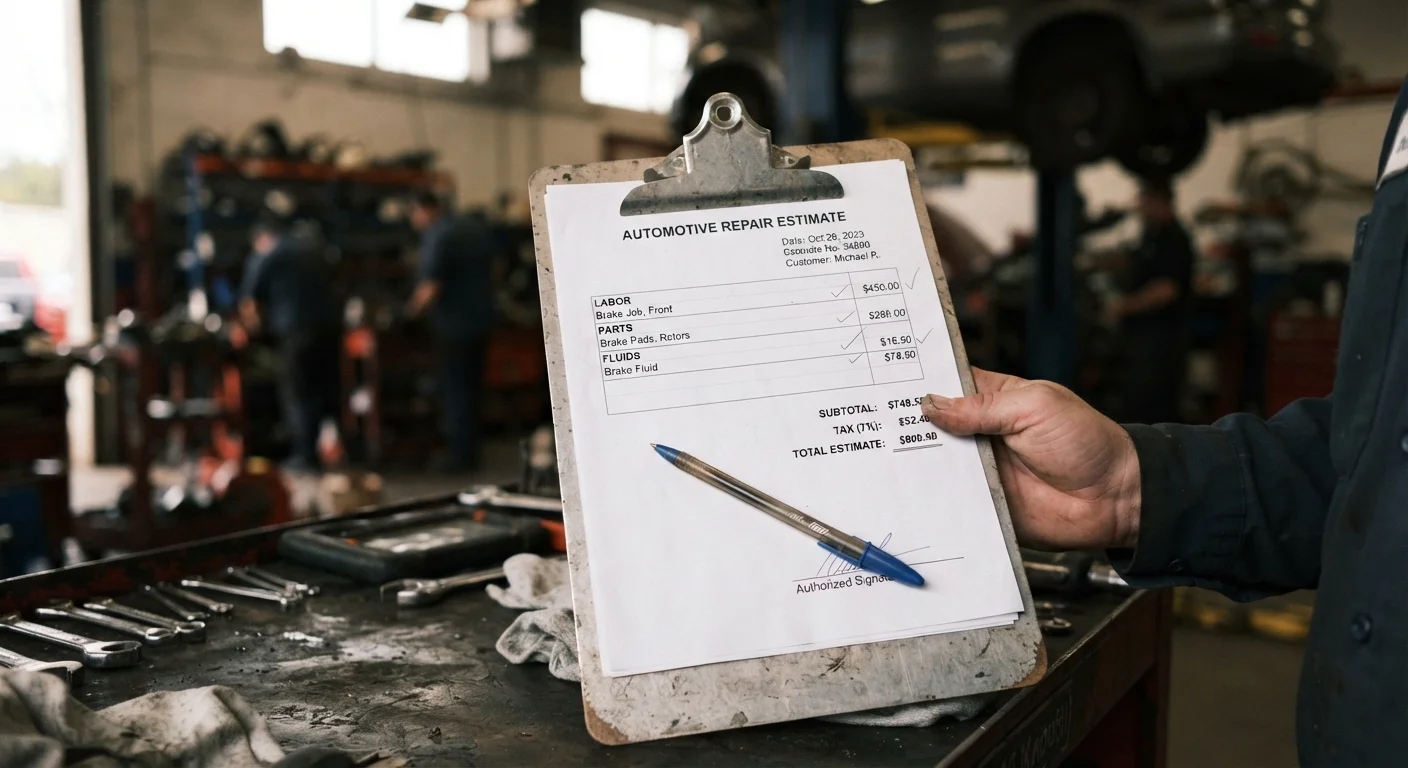
Photo credit: ResultsRover.com | Insights You Can Trust
In this article
Parts, labor, shop fees — repair estimates have a language of their own. Learn to decode one so you can ask the right questions before authorizing work.
Key Takeaways
- Repair estimates are divided into parts, labor, and shop fees - each with different markup potential.
- Labor hours are calculated from industry flat-rate guides, not actual time spent on your car.
- You have the right to request an itemized estimate and ask for replaced parts to be returned to you.
- A written estimate protects you legally; always get one before authorizing any work.
- Asking a few targeted questions before signing can prevent unexpected charges at pickup.
What You're Actually Looking At
A repair estimate is a formal document - not a rough guess. Shops in most states are legally required to provide one before beginning non-emergency work, and the final bill generally cannot exceed it by more than a set percentage without your prior approval. That legal framing matters: the estimate is a contract in progress.
Most estimates follow the same structure, regardless of whether they come from a dealership, a chain shop, or an independent mechanic:
- Parts: Every component the shop plans to install, listed by part number, description, and unit price.
- Labor: The number of hours billed for each repair task, multiplied by the shop's hourly labor rate.
- Shop supplies / fees: A catch-all line for consumables like rags, waste disposal, or fluids used during the job.
- Taxes: Applied to parts in most states; sometimes to labor as well.
- Sublet work: Jobs the shop sends out to a specialist (e.g., machine shop work), billed back to you.
For a broader look at how auto costs add up across ownership, the Auto Costs & Insurance hub is a useful reference point.
What you will need
The Part Prices Aren't Arbitrary - But They Are Marked Up
Shops buy parts at wholesale and sell them at retail, keeping the margin. That's standard and expected. What varies is the size of the markup - anywhere from 20% to over 100% depending on the shop and the part. You won't find the wholesale price on the estimate, but you can look up retail prices for common parts online to get a rough sense of where you stand.
The estimate should specify whether parts are OEM (original equipment manufacturer - made by or for your car's brand), aftermarket (made by a third party), or remanufactured (rebuilt from used cores). OEM parts typically cost more; aftermarket parts vary widely in quality. Ask which type is being used and why, especially for safety-critical components like brake parts or steering components.
Don't Authorize Work Based on a Phone Estimate Alone
A verbal or phone-based estimate isn't a legal document. Before any work begins, make sure a written estimate is on file and that you've signed an authorization. If the shop starts work before you've seen a written estimate, you lose important protections if the bill comes in higher than discussed.
One practical right worth knowing: you can usually request that the shop return replaced parts to you. This lets you verify the work was actually done. Ask before authorizing the job.
If you're navigating warranty implications of repair choices, common warranty misconceptions are worth understanding before you decide between OEM and aftermarket parts.
How Labor Hours Are Calculated
This surprises many drivers: the labor hours on your estimate aren't based on how long a technician actually spends on your specific car. They're drawn from industry flat-rate guides - standardized time tables published by data companies and used across the industry. A job listed as 2.5 hours takes 2.5 hours to bill whether it takes the tech 90 minutes or three hours.
This system isn't inherently unfair - experienced mechanics are faster, and flat-rate pricing rewards efficiency. But it means you should focus less on whether the hours seem high in isolation and more on whether the labor rate (the per-hour charge) is in line with your local market. Independent shops typically charge less per hour than dealerships; rates vary significantly by region.
Request a written, itemized estimate before any work begins
Ask for a written estimate that breaks out each part, labor operation, and fee individually. A single lump-sum figure gives you nothing to evaluate. In most states, shops must provide this by law - but you may need to ask explicitly.
Verify the parts type for each major component
For every significant part listed, note whether it's OEM, aftermarket, or remanufactured. Ask the service writer why that type was chosen and whether alternatives are available. This matters most for safety components and parts covered under an existing warranty.
Check the labor rate and total labor hours separately
Find the hourly rate - it's usually listed at the top or bottom of the estimate. Then check that each labor line's total equals hours multiplied by that rate. If any line item doesn't add up or isn't explained, ask before signing.
Understand and confirm the shop fee line
Identify the shop supplies or environmental fee and ask how it's calculated. If it's a percentage, ask whether it's capped. Some shops will reduce or waive this for larger jobs - it never hurts to ask.
Ask about the repair warranty before authorizing
Ask what warranty the shop provides on parts and labor. Get the duration and terms in writing on the estimate itself or on a separate document. Note whether the warranty is backed by the shop alone or also by a parts supplier.
Authorize in writing and keep your copy
Sign only when you're comfortable with every line. Keep a copy of the signed estimate. If the shop calls mid-repair with additional work, ask for a revised written estimate - called a supplement - before approving the added cost.
If you want a complementary perspective on parsing line-item documents, the home improvement estimate guide covers similar skills in a different context.
Shop Fees and the Lines That Catch People Off Guard
The "shop supplies" or "environmental fee" line is often a percentage of the total bill - sometimes 5-10% - added automatically. Some shops negotiate this; some don't. Either way, knowing it exists before you're at the counter makes it less of a surprise.
Watch for these other common line items that sometimes raise questions:
- Diagnostic fee
- Charged to identify the problem before any repair begins. Often credited toward the repair cost if you proceed - ask whether this applies.
- Sublet
- Work sent to another shop. You're paying a markup on top of the specialist's charge.
- Hazardous waste disposal
- Legitimate cost for fluids and materials; should be a small fixed fee, not a large percentage.
Ask for a Line-by-Line Walkthrough
Most service writers will walk you through the estimate verbally if you ask. This takes five minutes and often surfaces items that need clarification before they become disputes. Don't feel pressured to sign at the counter without that conversation.
Finally, before you leave the shop, confirm: does the estimate include a warranty on parts and labor? Most reputable shops offer at least 12 months or 12,000 miles on repairs. Get the terms in writing. For context on how repair coverage intersects with your broader policy, see how to read your car insurance policy.

Author
Auto Essentials Editorial Team
Auto Essentials Editorial Team is the collective byline for our editorial team and contributor network. Articles published under this byline or an editorial pen name are researched, written, and reviewed according to our editorial standards for clarity, consistency, and independence before publication.
View all articles →