
What the Nutrition Facts Label Is Actually Telling You
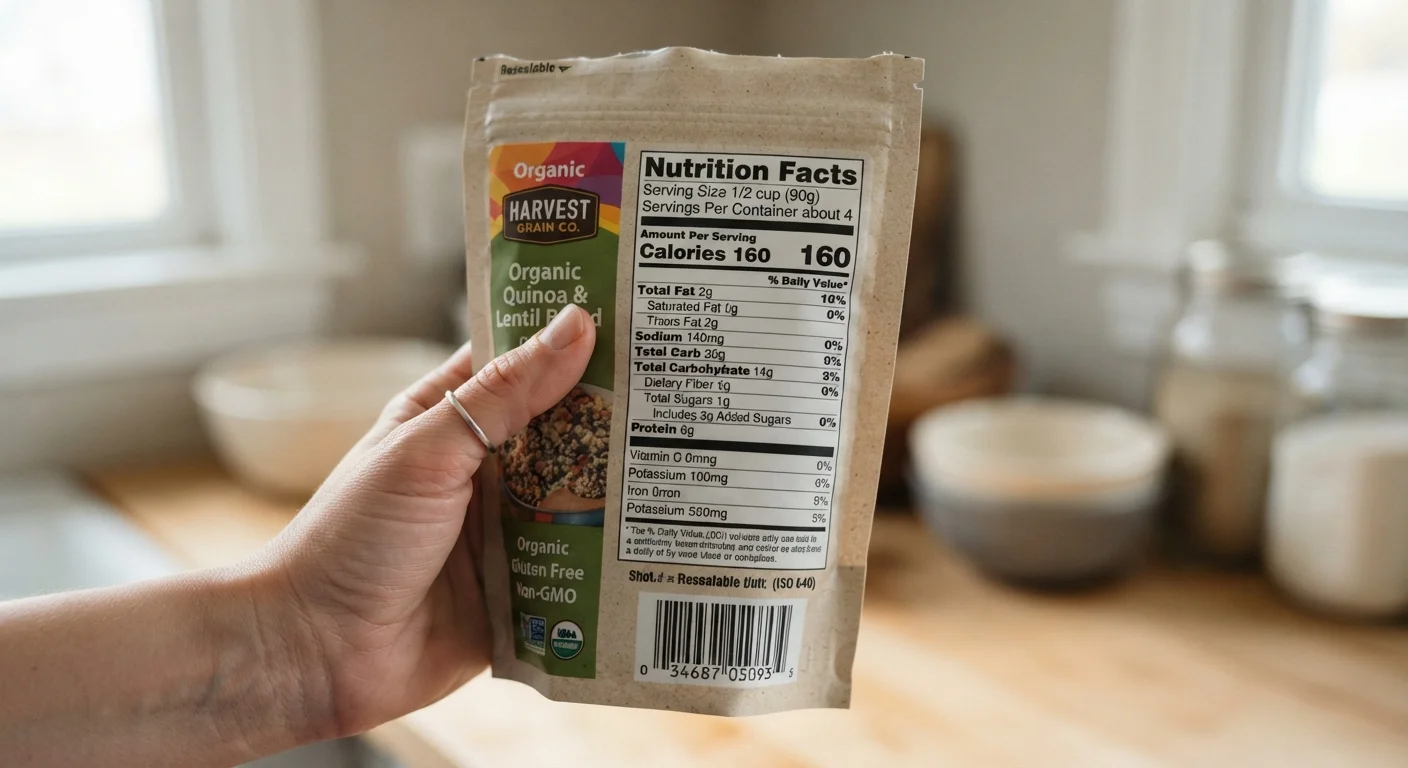
Photo credit: ResultsRover.com | Insights You Can Trust
In this article
Decode every line of the Nutrition Facts panel — from serving sizes to % Daily Value — so you can make informed choices at the grocery store.
Key Takeaways
- Serving size is a reference amount set by the FDA, not a dietary recommendation.
- % Daily Value shows how much of a nutrient one serving contributes to a standard 2,000-calorie daily diet.
- 5% DV or less is considered low for a nutrient; 20% DV or more is considered high.
- Added sugars are listed separately from total sugars because they behave differently in the body.
- Sodium, saturated fat, and added sugars are nutrients most Americans consume in excess.
- The label covers macronutrients and selected vitamins and minerals - not every compound in food.
Start Here: Serving Size and Servings Per Container
The very first line after the bold "Nutrition Facts" header is the serving size, and it anchors every number that follows. If a bag of chips lists a serving size of 1 oz (about 28g) and the bag contains 3 servings, every calorie and nutrient figure on the label must be multiplied by 3 if you eat the whole bag.
The FDA sets serving sizes based on reference amounts customarily consumed - real-world data on how much people typically eat of a given food. They are not recommendations. A serving of ice cream may be ½ cup, but that doesn't mean ½ cup is the "right" amount for you. It simply standardizes the measurement so labels across different brands can be compared apples to apples.
Practical tip: Before reading any other number, check how many servings you actually plan to eat, then adjust accordingly.
Compare Labels Before You Buy
When choosing between two similar products, make sure both labels show the same serving size before comparing nutrients. If serving sizes differ, the comparison becomes misleading. Adjusting to a common serving size - even mentally - gives you a more accurate picture of what you're actually getting.
Calories: A Measure of Energy, Not Quality
Calories measure the energy a food provides. The large, bold calorie number on the label represents calories per serving. While calorie awareness can be one useful tool, calories alone don't reveal whether a food is nutritious. Two foods with identical calorie counts can have very different effects on satiety, blood sugar, and nutrient intake.
Context matters more than the raw number. A 200-calorie serving of mixed nuts delivers protein, healthy fats, and fiber. A 200-calorie serving of a sweetened snack may offer little beyond quick energy. Neither story is told by calories alone - which is why the rest of the label exists.
70%
Americans who use nutrition labels when buying food
According to FDA consumer research, roughly 70% of Americans report using the Nutrition Facts label at least occasionally when making food purchasing decisions.
3,400 mg
Average daily sodium intake for U.S. adults
The CDC reports that the average American consumes about 3,400 mg of sodium per day - well above the 2,300 mg daily limit recommended in the Dietary Guidelines for Americans.
17 tsp
Average added sugars consumed daily by Americans
The American Heart Association notes that Americans consume an average of about 17 teaspoons of added sugars per day, significantly exceeding recommended limits.
Macronutrients: Fat, Carbohydrates, and Protein
Below calories, the label breaks out the three macronutrients - fat, carbohydrates, and protein. Each is listed in grams per serving, and fat and carbohydrates include important sub-categories.
- Total Fat is subdivided into saturated fat and trans fat. Saturated fat has an established % DV because current dietary guidelines recommend limiting it. Trans fat has no % DV listed; the goal is to keep it as close to zero as possible.
- Total Carbohydrate breaks into dietary fiber and total sugars, with added sugars as a sub-line of total sugars. Fiber has a % DV you want to reach; added sugars have a % DV you generally want to keep low.
- Protein is listed in grams but typically has no % DV on most labels. Requirements vary significantly by body weight and health status.
For a deeper look at what these nutrients actually do in the body, see our plain-English guide to macronutrients.
Understanding % Daily Value
The right-hand column of the label - % Daily Value (% DV) - is one of its most useful and most misunderstood features. It shows what percentage of a recommended daily intake one serving provides, based on a 2,000-calorie reference diet.
The FDA's quick reference rule: 5% DV or less is low for a nutrient; 20% DV or more is high. This makes label comparison fast. If you're trying to find a higher-fiber bread, look for a higher fiber % DV. If you're watching sodium, look for a lower sodium % DV.
% DV Is a Guide, Not a Rule
The % Daily Value column is calculated against a standard 2,000-calorie daily diet - a benchmark set for label consistency, not a universal recommendation. People with higher or lower calorie needs, specific health conditions, or prescribed dietary targets may need to interpret these numbers differently. A registered dietitian can help translate label information into guidance suited to your situation.
The 2,000-calorie baseline is a population-level reference point, not a personal target. Individual needs differ. Use % DV as a relative guide for comparing foods, not as a personal prescription.
Vitamins, Minerals, and What's Required
The bottom section of the Nutrition Facts panel lists select vitamins and minerals. Under the current FDA format, vitamin D, calcium, iron, and potassium are required disclosures - nutrients that public health data shows Americans frequently under-consume. Vitamins A and C, previously required, were removed from the mandatory list in the 2016 update because deficiencies are now less common in the general population.
Manufacturers may voluntarily list additional nutrients. The % DV column here is one you generally want to see go higher - these are nutrients to seek out, not limit.
The Nutrition Facts label and the ingredient list are companion tools. The label tells you amounts; the ingredient list tells you sources. For guidance on reading ingredient lists - including spotting hidden sugars and unfamiliar additive names - see our article on reading an ingredient list.
This article provides general nutrition education and is not a substitute for personalized advice from a registered dietitian or other qualified healthcare professional.
Frequently Asked Questions

Author
Health & Wellness Editorial Team
Health & Wellness Editorial Team is the collective byline for our editorial team and contributor network. Articles published under this byline or an editorial pen name are researched, written, and reviewed according to our editorial standards for clarity, consistency, and independence before publication.
View all articles →