
The Relationship Between Gut Health and What You Eat
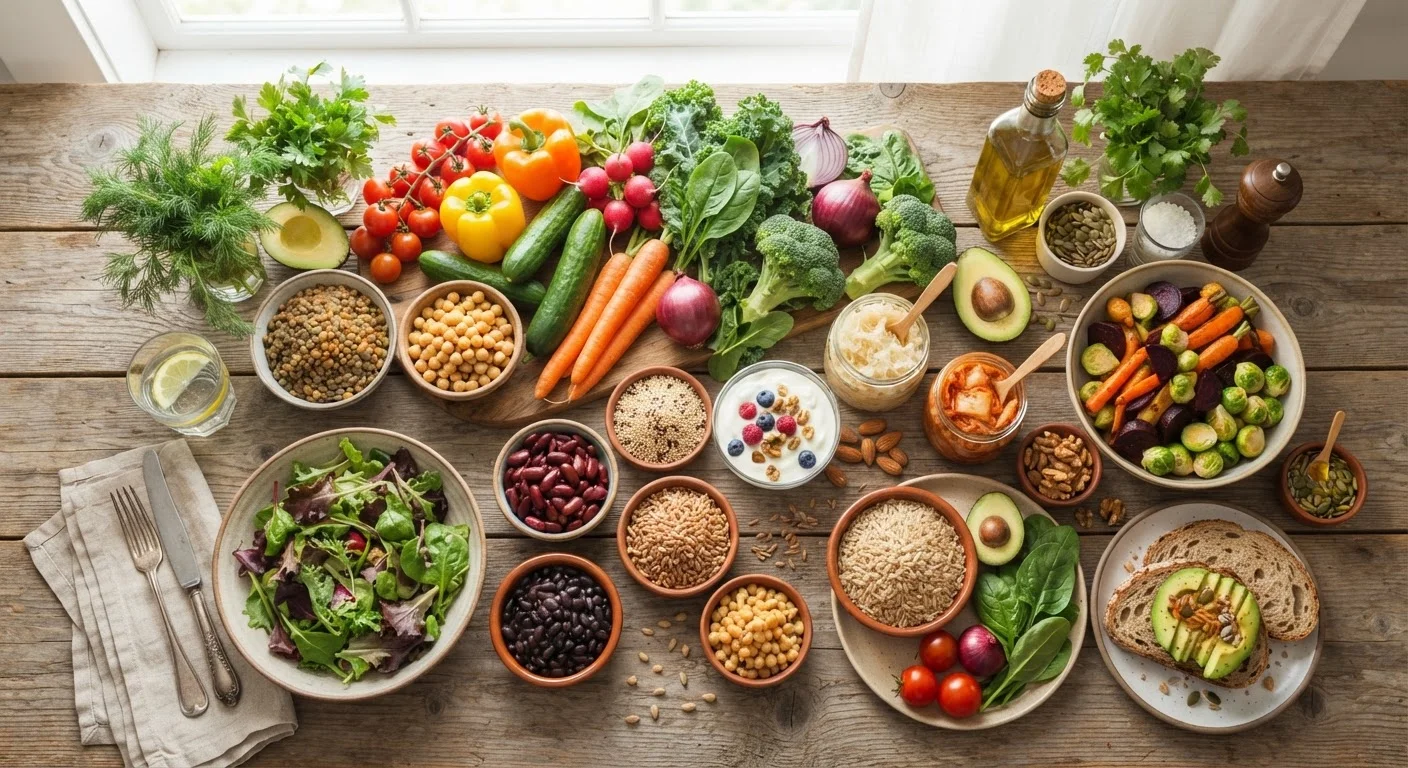
Photo credit: ResultsRover.com | Insights You Can Trust
In this article
An evidence-based overview of how dietary choices influence the gut microbiome and what that relationship means for overall health.
Key Takeaways
- Dietary choices are one of the most powerful factors shaping the gut microbiome.
- Fiber-rich foods feed beneficial gut bacteria, promoting a more diverse microbial community.
- Fermented foods can introduce live beneficial microorganisms directly into the gut.
- Ultra-processed foods are associated with reduced microbial diversity in research studies.
- A diverse diet generally supports a more diverse microbiome, which is linked to better health outcomes.
- Consult a healthcare professional before making major dietary changes, especially if you have a digestive condition.
Why the Gut Microbiome Matters
Your gut is home to an estimated 38 trillion microbial cells - roughly equal to the number of human cells in your body. This community, collectively called the gut microbiome, is not a passive passenger. It actively participates in digestion, synthesizes vitamins like B12 and K2, trains immune cells, and sends chemical signals to the brain via what researchers call the gut-brain axis.
Microbial diversity - having a wide variety of different species - is generally considered a marker of a healthier microbiome. Population studies have associated lower microbial diversity with conditions ranging from inflammatory bowel disease to obesity and metabolic disorders, though the causal relationships are still being studied. What is well established is that diet is one of the most significant modifiable factors affecting this diversity.
“The gut microbiome is exquisitely sensitive to what we eat. Diet is probably the most powerful tool we have to reshape microbial communities in ways that may benefit health.”
— Justin Sonnenburg, Professor of Microbiology and Immunology, Stanford University
How Fiber Feeds Your Gut Bacteria
Dietary fiber is the primary fuel source for beneficial gut bacteria. Unlike nutrients that are absorbed in the small intestine, fiber passes largely intact to the large intestine, where gut microbes ferment it into short-chain fatty acids (SCFAs) such as butyrate, propionate, and acetate. SCFAs nourish the cells lining the colon, help regulate inflammation, and may support healthy blood sugar and cholesterol levels.
Two broad types of fiber are relevant here. Soluble fiber - found in oats, beans, and apples - dissolves in water and forms a gel that feeds certain beneficial bacterial strains. Insoluble fiber - found in whole grains and many vegetables - adds bulk and supports gut motility. Both types matter. Our guide to dietary fiber explains the differences in detail and identifies the foods that supply each type.
Diversify Your Plant Foods Weekly
Rather than focusing on a single fiber source, try to eat from a broad range of plant foods each week - different vegetables, legumes, fruits, and whole grains. Different fiber types feed different microbial strains, so variety directly supports microbiome diversity. Rotating your grocery choices is a simple, low-effort strategy to put this into practice.
Fermented Foods and Live Microorganisms
Fermented foods - yogurt, kefir, sauerkraut, kimchi, miso, and kombucha - contain live microorganisms that survive digestion in varying degrees. A 2021 clinical trial published in Cell found that participants who increased fermented food intake over ten weeks showed increased microbiome diversity and decreased markers of inflammation compared to a high-fiber group. While promising, this is one study, and research in this area is still maturing.
The practical takeaway is that regularly including a variety of fermented foods alongside a fiber-rich diet appears to be a reasonable strategy based on current evidence. These foods are widely available, well-tolerated by most people, and carry few risks for healthy adults.
~38 trillion
Estimated microbial cells in the human gut
This figure, from a widely cited 2016 estimate by Sender et al. in Cell, underscores the scale of the microbial community that dietary choices help shape.
~1,000+
Bacterial species identified in the human gut
Research published in Nature has catalogued over one thousand bacterial species across human gut samples, though any individual typically hosts a subset of a few hundred.
10-15%
Average daily fiber intake vs. recommended levels
According to dietary survey data from the CDC and USDA, most American adults consume well below the recommended daily fiber intake of 25-38 grams.
What Ultra-Processed Foods Do to the Microbiome
Ultra-processed foods - broadly defined as industrial formulations with multiple additives, emulsifiers, and refined ingredients - are associated in observational research with reduced gut microbial diversity. Certain emulsifiers used in processed foods have been shown in animal studies to disrupt the mucus layer protecting the gut lining, though human evidence is still accumulating.
High sugar intake may selectively promote the growth of less beneficial microbial strains over fiber-fermenting bacteria. This doesn't mean that occasional processed food consumption ruins gut health, but dietary patterns dominated by these foods over time appear to work against microbiome diversity. This is also a useful frame for debunking common food myths - our article on nutrition myths explores how the evidence often points away from single-food blame toward overall dietary patterns.
Individual Responses to Diet Vary
The gut microbiome is highly individual - two people eating identical diets can develop quite different microbial profiles. Factors including genetics, age, medications (particularly antibiotics), stress, and sleep all interact with diet to shape gut health. This means population-level findings about diet and the microbiome may not translate identically to every individual.
Building a Gut-Friendly Diet in Practice
Improving gut health through diet does not require an overhaul or rigid protocol. The evidence consistently points toward a few durable principles: eat a wide variety of plant foods, prioritize fiber across multiple food types, include fermented foods regularly, and reduce reliance on heavily processed products.
Variety is particularly important. Different bacterial species thrive on different types of fiber and plant compounds called polyphenols. Eating across a broad range of vegetables, fruits, legumes, nuts, seeds, and whole grains exposes gut bacteria to a diverse nutrient landscape, supporting a richer microbial community. Aiming for a wide range of plant foods weekly - rather than fixating on any single superfood - is a practical and evidence-aligned approach.
This article is for general informational purposes only and is not a substitute for professional medical or nutritional advice. Always consult a qualified healthcare provider before making significant changes to your diet, particularly if you have a digestive condition or chronic illness.
Frequently Asked Questions

Author
Health & Wellness Editorial Team
Health & Wellness Editorial Team is the collective byline for our editorial team and contributor network. Articles published under this byline or an editorial pen name are researched, written, and reviewed according to our editorial standards for clarity, consistency, and independence before publication.
View all articles →