
Eating Well on a Tight Schedule: Realistic Strategies That Hold Up
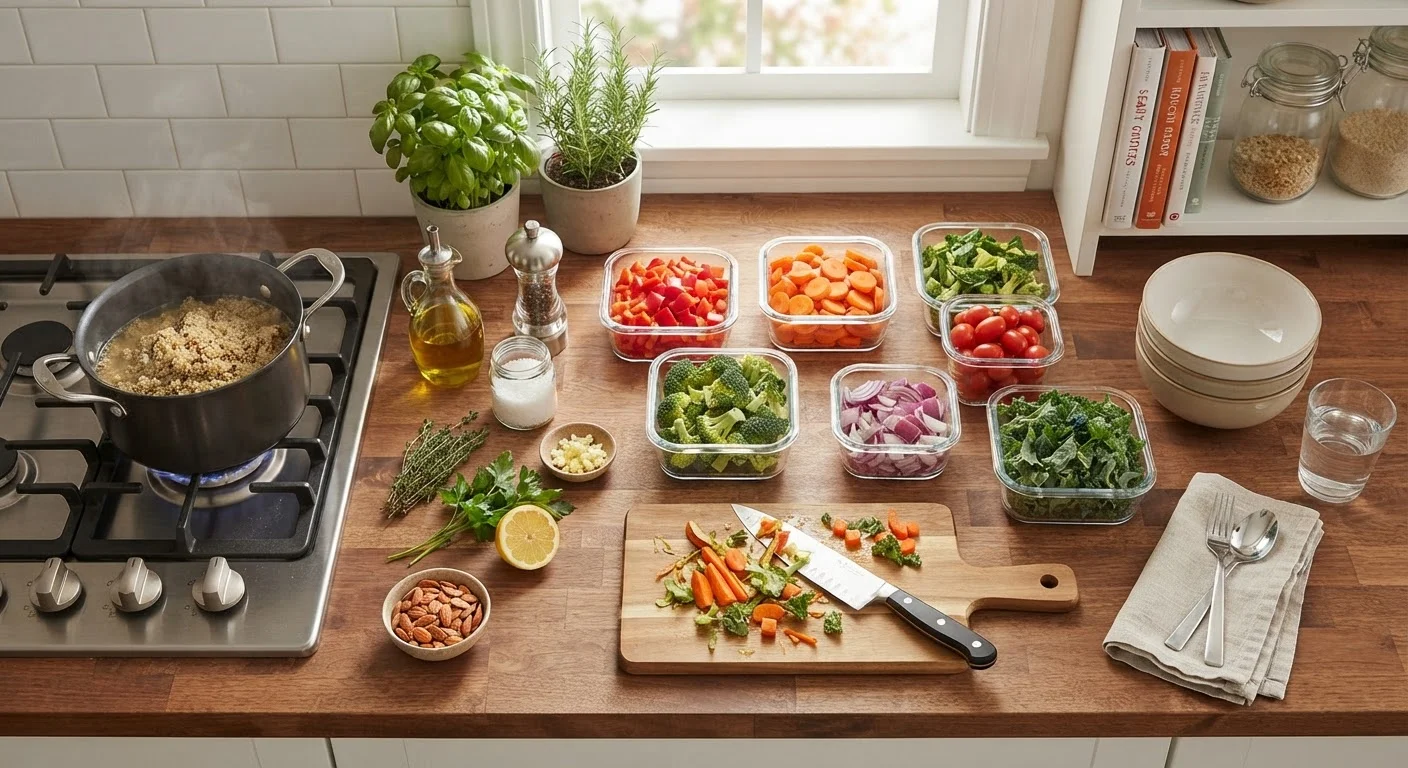
Photo credit: ResultsRover.com | Insights You Can Trust
In this article
Practical approaches to nutritious eating when time is scarce — from smarter batch cooking to no-prep meal combinations that actually work.
Key Takeaways
- Batch cooking a few core ingredients once a week dramatically reduces daily decision fatigue.
- No-cook and minimal-prep meals can be nutritionally complete without recipes or complicated techniques.
- Strategic grocery habits - not willpower - are what make consistent healthy eating realistic.
- Vegetable intake is easy to underestimate; simple add-ins can close the gap without extra cooking.
- Eating well on a tight schedule is about building repeatable systems, not achieving perfection.
Why Busy People Struggle With Eating Well
Time scarcity is consistently one of the top reasons Americans cite for poor diet quality. When a workday runs long, the easiest option tends to win - and the easiest option is rarely the most nutritious. But the underlying problem usually isn't motivation. It's the absence of a system that doesn't require daily effort to maintain.
Research published in nutrition and public health literature consistently points to environment and convenience as stronger predictors of food choice than knowledge alone. In other words, knowing what to eat matters far less than having the right foods accessible when hunger hits. Building a balanced plate doesn't require tracking every calorie - it requires reducing friction at the moment of decision.
The strategies below are designed for real schedules. They don't assume you have an hour on Sunday or access to specialty ingredients. They do assume that small, repeatable habits compound over time.
Core Practices for Eating Well When Time Is Short
The following approaches are grounded in practical nutrition science and the realities of busy American households. None requires cooking skill or significant time investment.
Cook one or two versatile base ingredients in bulk each week
Having a ready supply of cooked grains, legumes, or a protein like hard-boiled eggs removes the biggest barrier to a nutritious meal: starting from zero when you're already hungry. Batch cooking these components takes roughly the same effort as cooking once but multiplies available meals across the week.
Build a shortlist of five to seven no-recipe meal combinations
Decision fatigue is real, and it drives poor food choices. Having a mental (or written) shortlist of balanced combinations you can assemble without thinking eliminates the 'what do I make?' paralysis that leads to ordering takeout.
Stock frozen and shelf-stable produce as a nutritional safety net
Fresh vegetables are ideal but frequently go to waste before a busy household can use them. Frozen vegetables are picked and frozen at peak ripeness, preserving most of their nutrient content - making them a nutritionally sound and waste-resistant alternative that's always available.
Treat grocery shopping as a system, not a weekly chore
Reactive grocery shopping - going to the store without a list, or buying whatever looks appealing - leads to inconsistent food availability at home. A repeatable grocery routine built around food categories rather than specific recipes creates a reliable nutritional foundation without requiring weekly meal planning.
Eat protein and fiber together at every meal
Protein and dietary fiber together promote satiety more effectively than either alone, reducing the likelihood of energy crashes and subsequent impulse snacking. Grounding every meal in these two components - regardless of what else is on the plate - improves diet quality without requiring calorie tracking.
Quick Wins You Can Start Today
You don't need to overhaul your kitchen or your schedule to eat better. These starting points are designed for immediate action - each one moves the needle without demanding a large commitment of time or energy. If you're also looking to strengthen other healthy habits alongside nutrition, see our article on low-effort mental wellness habits for similarly realistic approaches.
Make Your Environment Do the Work
Research consistently shows that food placement and visibility shape what people eat more than intentions do. Keep the most nutritious options at the front of your refrigerator and at counter height. Move less nutritious snacks out of direct sight - not necessarily out of the house, but less immediately accessible. This small shift reduces impulsive choices without requiring willpower.
Filling the Gaps: Vegetables and Micronutrients
Most Americans fall meaningfully short of recommended vegetable intake without realizing it - and a busy schedule accelerates that gap. Vegetable intake is often lower than people assume, partly because portions at restaurants and packaged meals skew heavily toward grains and protein.
1 in 10
U.S. adults meeting daily vegetable recommendations
According to CDC data, fewer than one in ten American adults consume the recommended amount of vegetables each day.
90%
Of Americans fall short on dietary fiber
The 2020-2025 Dietary Guidelines for Americans identifies dietary fiber as a nutrient of public health concern due to widespread underConsumption.
Closing the gap doesn't require elaborate salads. Frozen vegetables microwaved in two minutes, bagged spinach stirred into scrambled eggs, or pre-cut broccoli added to any grain bowl are all legitimate strategies. Similarly, several key micronutrients - including vitamin D, magnesium, and potassium - are underconsumed across the U.S. population. Whole foods like legumes, leafy greens, and nuts address multiple gaps simultaneously, making them efficient choices when grocery budgets and time are both limited.
For a structured way to audit your current grocery habits, a weekly grocery list audit can help you spot nutrient gaps before they become entrenched patterns.
Considering a Plant-Forward Approach?
Shifting toward more plant-based foods offers meaningful nutritional benefits but also comes with trade-offs worth planning around, particularly for protein and certain micronutrients. Our article on plant-based eating trade-offs provides an honest, evidence-based overview to help you navigate those considerations. If you have specific health conditions or dietary needs, consult a registered dietitian before making significant changes to your eating pattern.
This article is for general informational and educational purposes only and is not a substitute for professional medical or dietary advice. Consult a qualified healthcare provider or registered dietitian for guidance specific to your health needs.

Author
Health & Wellness Editorial Team
Health & Wellness Editorial Team is the collective byline for our editorial team and contributor network. Articles published under this byline or an editorial pen name are researched, written, and reviewed according to our editorial standards for clarity, consistency, and independence before publication.
View all articles →