
How Market Timing Influences What You Pay (and What You Get) for a Car
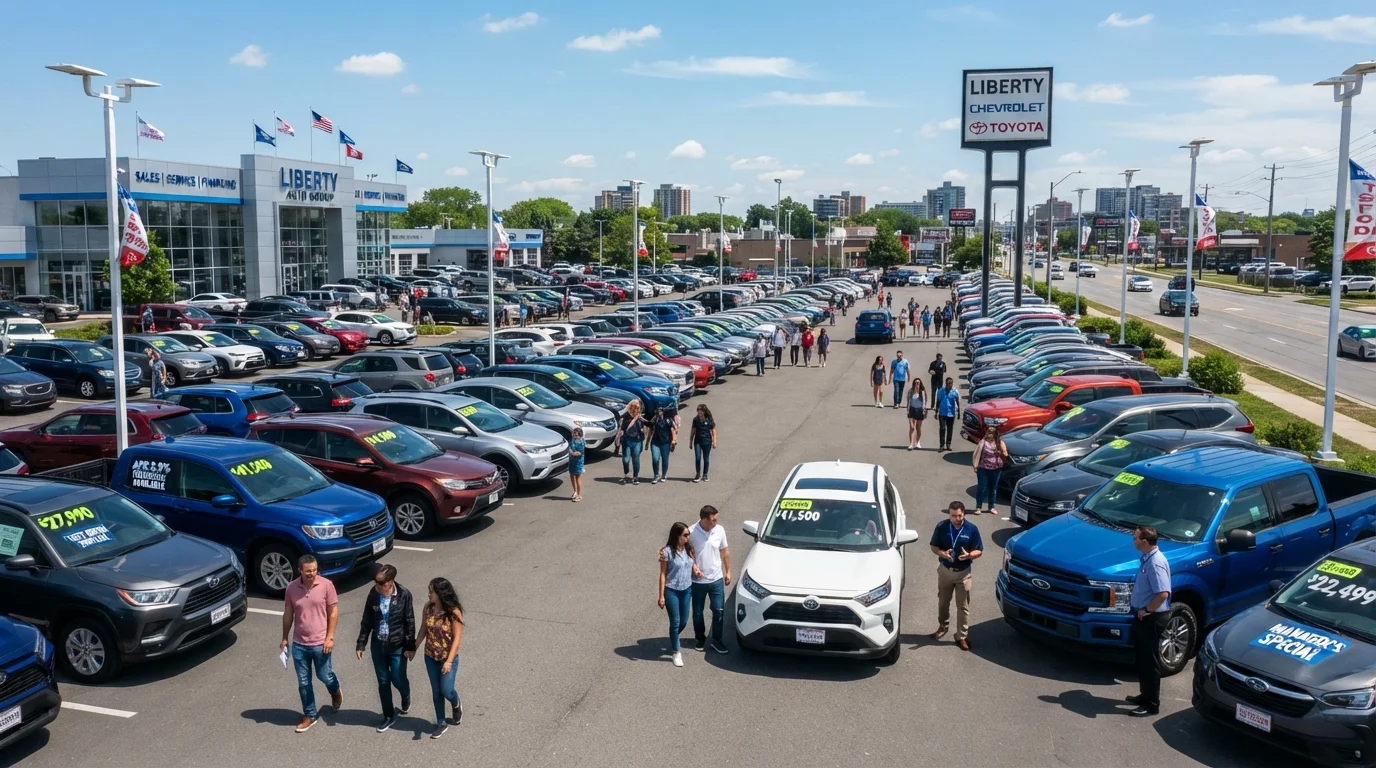
Photo credit: ResultsRover.com | Insights You Can Trust
In this article
Inventory cycles, seasonal demand, and broader economic factors all shape car prices. Here's how market conditions affect buyers and sellers differently.
Key Takeaways
- Inventory levels are one of the strongest short-term drivers of car prices - low supply pushes prices up, high supply gives buyers more leverage.
- Seasonal demand shifts create predictable windows when buyers or sellers hold more negotiating power.
- Economic conditions such as interest rates affect both the monthly payment and the total cost of a financed vehicle.
- Sellers (including trade-in owners) benefit from the same market dynamics buyers try to avoid.
- Awareness of market conditions helps set realistic expectations, but no single factor guarantees a better deal.
What Actually Moves Car Prices
Car prices are not set in a vacuum. They reflect the intersection of how many vehicles are available, how many people want them, and how affordable financing is at any given moment. Understanding these forces won't eliminate negotiation, but it will tell you whether conditions currently favor buyers or sellers - and that context is worth real money.
Three factors do the most work: inventory supply, seasonal demand, and macroeconomic conditions like interest rates and fuel prices. Each operates on a different time scale and affects new and used vehicles somewhat differently. For a fuller picture of what vehicle ownership costs beyond the purchase price, see the full breakdown of car ownership costs.
60-80 days
Typical healthy dealer days supply for new vehicles
Industry analysts generally consider a 60-to-80-day supply a balanced market; figures well below this threshold have historically corresponded with above-MSRP transaction prices.
~$1,000+
Estimated added annual loan cost per 2-point rate increase
On a $30,000 vehicle financed over 60 months, a 2-percentage-point increase in the interest rate adds roughly $1,000 or more in total interest paid over the loan term, illustrating how rate shifts affect total cost independently of vehicle price.
Inventory Supply: The Most Direct Price Driver
Dealer inventory - measured in the auto industry as days supply - is probably the single biggest short-term lever on price. When days supply is low, dealers hold more pricing power; when it's high, buyers gain leverage.
Supply disruptions (production slowdowns, shipping bottlenecks, semiconductor shortages) can compress inventory across entire segments simultaneously, pushing transaction prices well above MSRP for popular models. Conversely, when manufacturers ramp up production or incentives, inventory grows, and dealers become more willing to negotiate.
Used car supply operates differently - it is replenished by trade-ins, lease returns, and fleet disposals rather than factory output. This makes used inventory more sensitive to consumer behavior: during periods of high new-car prices, more buyers shift to used vehicles, drawing down that supply and raising prices there too.
Seasonal Demand Patterns
Retail car demand follows recognizable seasonal rhythms. Spring and early summer typically see stronger buying activity as tax refunds circulate and families plan purchases before school years. This demand pressure can limit negotiating room during those months.
Late autumn and the December period historically see softer foot traffic. Dealers managing year-end inventory targets and manufacturers clearing model-year stock may be more open to pricing flexibility - though this varies by model and region. Similarly, convertibles and sports cars tend to see price pressure in spring; trucks and SUVs may be more negotiable in winter months when demand for those vehicles dips in colder climates.
Use Days Supply Data Before You Negotiate
Several automotive data services publish regional and national days-supply figures by segment. Checking these numbers for the specific vehicle type you want gives you a factual basis for gauging how much negotiating room is realistic - rather than guessing based on general market sentiment.
Seasonal patterns are tendencies, not guarantees. A low-inventory environment can override seasonal softness entirely. Check current market data for the specific vehicle you want rather than relying solely on calendar rules.
How Economic Conditions Shape the Market
Interest rates set the context for the entire car-buying equation. When rates are low, monthly payments on financed vehicles are smaller, which supports demand - and often higher transaction prices. When rates rise significantly, some buyers are priced out of the market or shift to less expensive options, which can exert downward pressure on prices, particularly in segments popular with finance-dependent buyers.
Fuel prices create their own demand shifts. Sustained increases in gasoline costs tend to move consumer preference toward fuel-efficient vehicles, raising prices for those models and softening demand - and prices - for trucks and large SUVs. These shifts can happen relatively quickly.
Economic conditions also affect how costs accumulate over a vehicle's life. Car ownership costs shift significantly as a vehicle ages, and the financing environment at the time of purchase echoes through years of payments.
“The car market is one of the few large consumer purchases where a buyer who understands supply and demand dynamics can meaningfully affect the final price. That knowledge is the most durable negotiating tool available.”
— Auto Essentials Editorial Team, Automotive consumer guidance publication
What This Means if You're Selling or Trading In
Market conditions that frustrate buyers tend to reward sellers. When inventory is tight and demand is strong, private-party and trade-in values rise. Sellers who understand this dynamic can time a sale to coincide with favorable conditions - or at minimum, use current market data to push back if a dealer's trade-in offer seems low.
Independent vehicle valuation tools (based on recent actual transactions, not just asking prices) give sellers a baseline before any dealer conversation. For context on what charges can follow any agreed price, see the costs that appear after you agree on a price.
For a structured look at how pricing patterns work across purchase categories more broadly, timing a purchase and what the evidence actually supports is worth reading alongside this article.
This article is for general informational purposes only and does not constitute financial or purchasing advice. Prices, market conditions, and financing terms vary widely by region, vehicle type, and time. Consult current market data and, where appropriate, a qualified financial adviser before making a vehicle purchase decision.
Frequently Asked Questions

Author
Auto Essentials Editorial Team
Auto Essentials Editorial Team is the collective byline for our editorial team and contributor network. Articles published under this byline or an editorial pen name are researched, written, and reviewed according to our editorial standards for clarity, consistency, and independence before publication.
View all articles →