
Packing Light Without Sacrifice: A Carry-On Strategy for Any Trip Length
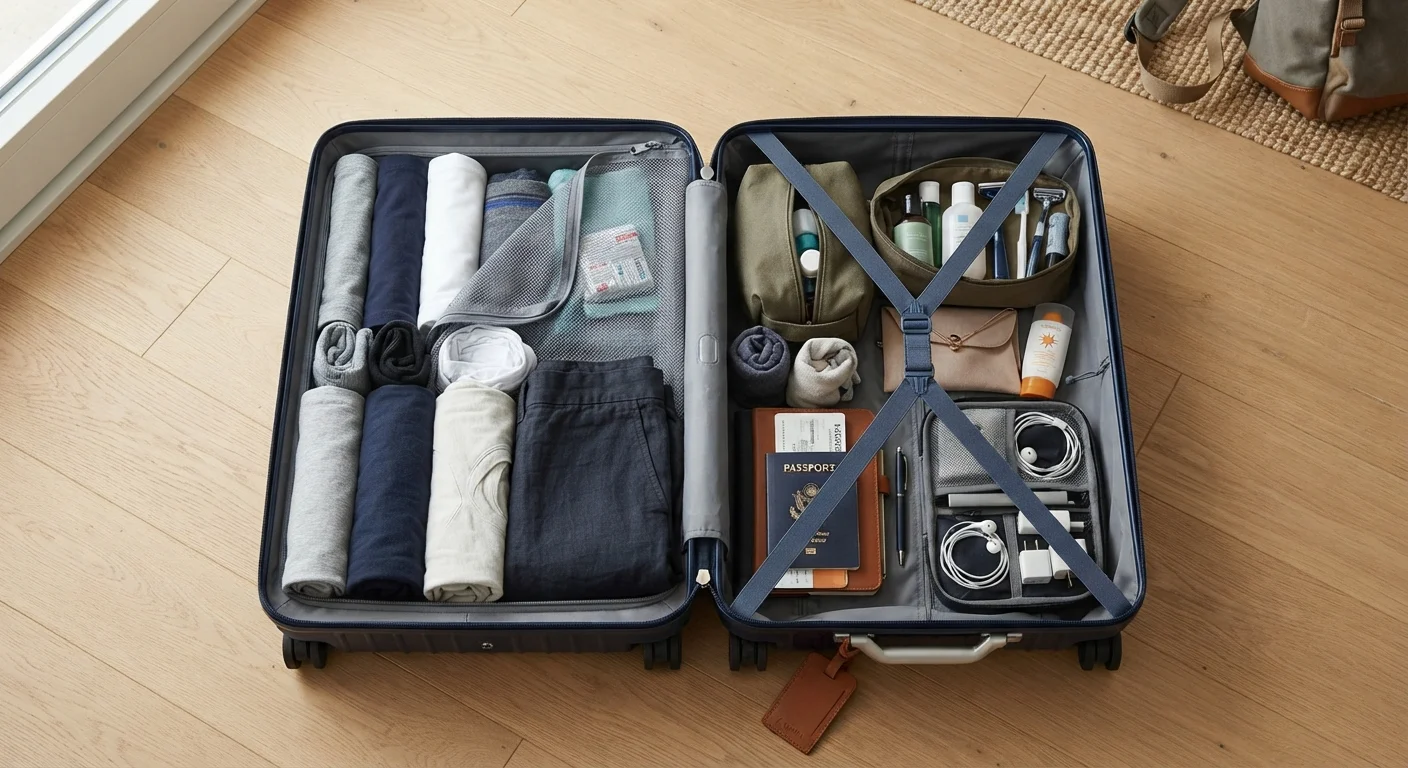
Photo credit: ResultsRover.com | Insights You Can Trust
In this article
Checked bag fees add up fast. This practical guide covers how to pack efficiently for trips ranging from a weekend getaway to two weeks abroad.
Key Takeaways
- Checked bag fees can add $35–$70 per flight leg, making carry-on travel a direct cost saver.
- A structured packing system — not a larger bag — is what makes carry-on work for longer trips.
- Versatile, quick-dry clothing and decanted toiletries eliminate the most common packing roadblocks.
- Laundry access even once mid-trip unlocks carry-on travel for trips lasting two weeks or longer.
- Always verify your specific airline's carry-on size and weight limits before you pack.
Why Carry-On Travel Is Worth Mastering
Checked bag fees are no longer incidental — they're a meaningful budget line. Round-trip fees on domestic flights commonly run $70–$140 per traveler per bag, and that's before you factor in international routes, overweight charges, or the time spent waiting at baggage claim. For cost-conscious travelers, going carry-on only is one of the most direct ways to reduce trip costs without compromising the experience itself.
Beyond the financial argument, there's a practical one: a carry-on travels with you. No checked bag means no lost luggage risk, no waiting at carousels, and the flexibility to take connecting flights you'd otherwise avoid for fear of your bag not making it. If you're working with a tight itinerary — see our weekend trip planning guide for how to structure one — eliminating baggage delays is genuinely valuable.
The mental model shift that makes carry-on travel work is simple: it's not about fitting everything you'd normally pack into a smaller space. It's about rethinking what you actually need.
What you will need
What You'll Need Before You Start Packing
Getting the right gear in place before packing day makes the whole process faster and less frustrating. Here's what to have on hand:
Carry-On Suitcase or Travel Backpack
Primary luggage container; must fit within airline overhead bin size limits — typically 22 x 14 x 9 inches for most US carriers, but verify with your specific airline.
Personal Item Bag
Secondary bag that fits under the seat in front of you, effectively doubling your packing space at no extra cost on most airlines.
Packing Cubes
Fabric organizer cubes that compress clothing and keep categories separate, making it far easier to find items and repack mid-trip.
Travel-Sized Toiletry Containers
Refillable bottles under 3.4 oz that let you bring your preferred products through TSA security without buying travel-size versions at a premium.
Lightweight Luggage Scale
Lets you weigh your bag before arriving at the airport so you can avoid overweight carry-on fees on airlines that enforce weight limits.
Note that carry-on size enforcement varies by airline and even by route — budget and regional carriers tend to be stricter. If you're building a trip from the ground up and haven't confirmed fees and bag rules yet, the pre-trip planning checklist is a useful starting point.
The Carry-On Packing Process, Step by Step
The steps below apply whether you're packing for a 3-day weekend or a 14-day international trip. The variables change (number of items, laundry planning), but the process stays the same.
Confirm your airline's carry-on rules before anything else
Size and weight limits vary meaningfully across carriers. A bag that flies free on one airline may trigger a gate-check fee on another. Look up your specific airline's carry-on policy on their official website — check both dimensions and weight limits, since budget carriers especially tend to enforce both.
Write down the limits. This single step prevents the most common and avoidable packing mistake.
Build your clothing list around a core color palette
Pick two or three neutral base colors (navy, grey, olive, black, or white work well) and limit yourself to items that mix and match within that palette. This approach means every piece you pack can combine with nearly everything else, multiplying your outfit options without multiplying items.
A practical starting framework for a 7-day trip: 4–5 tops, 2–3 bottoms, 1 layering piece, 1 pair of shoes beyond what you wear onto the plane, and enough underwear and socks for 4–5 days.
Apply the 'half, then half again' edit
Lay out everything you think you want to pack. Now remove half of it. Then look at what remains and remove anything you feel uncertain about. Most travelers return home having worn a predictable core set of items and left several pieces untouched.
Ask for each item: does this serve a specific, confirmed purpose on this trip? If the answer is 'maybe' or 'just in case,' leave it behind.
Pack toiletries within TSA liquid rules and use your personal item strategically
All liquids, gels, and aerosols in your carry-on must be in containers of 3.4 oz (100ml) or less and fit in a single quart-sized clear bag — this is the TSA 3-1-1 rule. Decant your preferred products into reusable travel containers rather than buying miniature versions.
Solid alternatives (shampoo bars, solid deodorant, toothpaste tablets) sidestep the liquid rule entirely and free up space in your quart bag for items that genuinely need to be liquid.
Use your personal item for toiletries, electronics, documents, and anything you'll want access to during the flight. Reserve the carry-on for clothing and bulkier items.
Use a roll-and-cube system to maximize space
Rolling clothing rather than folding it reduces volume and minimizes wrinkles for most fabrics. Packing cubes then organize rolled items by category (tops, bottoms, underlayers) so you're not unpacking everything to find one item.
Pack heaviest items (shoes, electronics) closest to the wheels or bottom of the bag, and fill gaps with socks and small accessories. A bag that's organized loads more efficiently than one that's simply stuffed.
Plan for laundry if your trip exceeds 7 days
Carry-on travel for longer trips doesn't mean packing more — it means planning one laundry cycle. Most hotels offer laundry service or have self-service machines. Laundromats are easy to locate in most destinations and typically cost a few dollars for a full wash-and-dry cycle.
Building in one laundry day around the midpoint of a two-week trip means you can pack exactly the same way as you would for a week. It also freshens your bag for the return leg.
For travelers heading abroad, consider quick-dry clothing specifically; many items can be hand-washed in a sink and ready to wear within a few hours, eliminating the need for a dedicated laundry stop.
Test Your Pack Before Travel Day
Once your bag is packed, carry it around your home for 15 minutes. If it feels unmanageable empty-handed, it will feel worse at an airport. This is also the time to confirm it fits within your airline's size limits using a measuring tape or by fitting it into a bag-sizer if you have one. Making adjustments at home costs nothing; making them at the gate is stressful and potentially expensive.
Travelers new to structured budget travel may also find it useful to review the broader strategies in our budget travel overview — particularly around planning spending categories before departure.
Common Mistakes That Undermine a Good Packing Strategy
Even with a solid plan, a few habits consistently trip up otherwise well-prepared travelers:
- Packing for worst-case scenarios: Most 'just in case' items never get used. Pack for the trip you're actually taking, not every version of it.
- Ignoring weight limits: Some carriers charge carry-on overweight fees that rival checked bag costs. Weigh your bag before leaving home, especially on international or budget flights.
- Overpacking shoes: Shoes are disproportionately heavy and bulky. Limit yourself to two pairs maximum — one worn, one packed — and choose versatile styles that work across contexts.
- Forgetting the personal item: Your under-seat bag is free real estate. Use it for anything you'll want in-flight or need quick access to, and let it absorb the items that would otherwise push your carry-on over its limit.
Gate-Check Fees Can Erase Your Savings
On many airlines, a carry-on that doesn't fit in the overhead bin — whether due to size, weight, or a full flight — gets gate-checked and billed at checked bag rates. Some budget carriers charge a premium above the standard checked bag fee for bags that weren't pre-paid. Confirm your bag dimensions against your airline's limits and consider paying any optional carry-on fee in advance if your carrier charges one — it's almost always less than paying at the gate.
For travelers managing a complex or multi-destination itinerary, the complete affordable trip planning guide covers how carry-on strategy fits into the broader picture of keeping travel costs manageable.

Author
Travel Smart Editorial Team
Travel Smart Editorial Team is the collective byline for our editorial team and contributor network. Articles published under this byline or an editorial pen name are researched, written, and reviewed according to our editorial standards for clarity, consistency, and independence before publication.
View all articles →