
Paris vs. Rome: Two Classic European Capitals, Two Very Different Trips
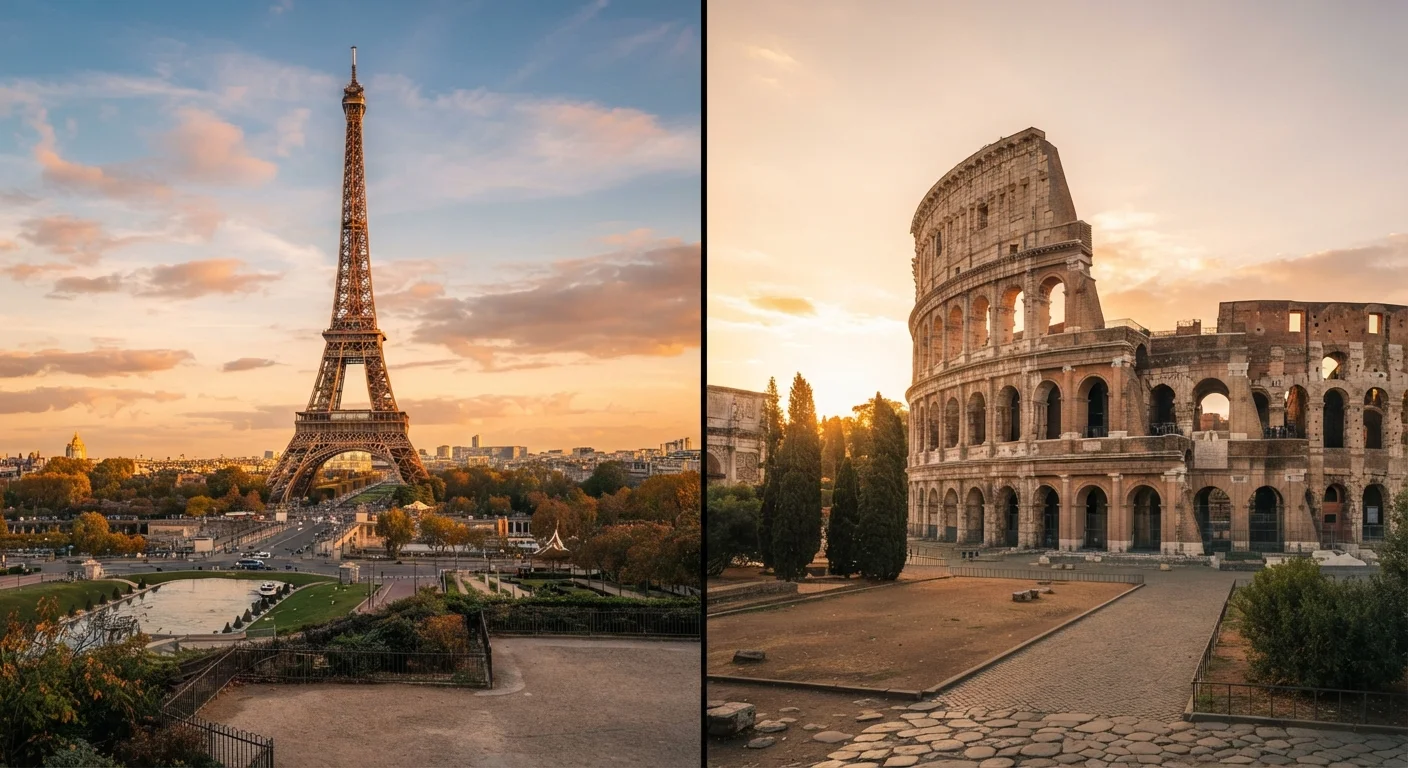
Photo credit: ResultsRover.com | Insights You Can Trust
Pace, food culture, transit ease, and crowd patterns differ significantly between Paris and Rome. See how they stack up for different traveler priorities.
Key Takeaways
- Paris offers a more predictable, transit-friendly experience; Rome rewards explorers comfortable with spontaneity.
- Rome generally costs less per day for food and accommodation than Paris, though neither city is cheap.
- Both cities are heavily visited in summer — shoulder seasons (April–May, September–October) reduce crowds significantly.
- Paris suits museum-focused and first-time European travelers; Rome suits history buffs and outdoor sightseers.
- Advance booking for major attractions is essential in both cities, especially the Louvre and the Vatican Museums.
Pace and City Layout
Paris is organized into 20 arrondissements arranged in a spiral, making it genuinely navigable on foot and by Métro. Neighborhoods have distinct personalities — Le Marais for history and galleries, Montmartre for a village feel, Saint-Germain-des-Prés for literary cafés — and transitions between them are smooth. The city rewards a deliberate, planned approach.
Rome, by contrast, is layered and occasionally chaotic in the best sense. Streets rarely follow a grid, ancient sites interrupt modern neighborhoods, and getting pleasantly lost is part of the experience. The trade-off is that navigation takes more mental energy, and the city's transit system (two main metro lines, supplemented by buses) requires more flexibility from visitors.
| Criterion | Paris | Rome |
|---|---|---|
| Transit System | Extensive, frequent metro grid | Limited metro, bus-dependent |
| Navigation Ease | Logical layout, clear signage | Irregular streets, organic layout |
| Daily Food Costs | Higher on average | Lower on average |
| Primary Appeal | Museums, café culture, neighborhoods | Ancient history, outdoor monuments |
| Shoulder Season | Apr–May, Sep–Oct | Apr–May, Sep–Oct |
| First-Timer Friendliness | Very high | Moderate — rewards flexibility |
| Advance Booking Need | Essential for Louvre, Versailles | Essential for Vatican, Colosseum |
Crowds, Costs, and Timing
Both cities peak hard in July and August — long lines, elevated prices, and intense heat. Shoulder seasons deliver a noticeably better experience in both destinations. April through May and late September through October offer manageable crowds, mild temperatures, and more accommodation flexibility.
~19M
Annual visitors to Paris
Paris consistently ranks among the most visited cities globally, according to Euromonitor and UNWTO tourism data.
~7M
Annual Colosseum visitors
The Colosseum in Rome is one of the most visited paid monuments in Europe, based on Italian Ministry of Culture figures.
2–3°C
Average temp difference, summer
Rome typically runs slightly warmer than Paris in July and August, which can affect outdoor sightseeing comfort.
On daily costs, Rome generally runs lower. A sit-down lunch at a neighborhood trattoria, a coffee at the bar, and budget accommodation options collectively give Rome an edge for travelers watching their spending. Paris is among Europe's pricier capitals — though the range is wide, and budget-conscious travelers can manage with self-catering and careful neighborhood selection.
Prices, availability, and travel conditions can change. Always verify current entry requirements, visa rules, and local advisories through official government sources before traveling.
What You'll Actually Do All Day
In Paris, the dominant rhythm is museum-and-neighborhood. The Louvre, Musée d'Orsay, and Centre Pompidou each demand hours of dedicated time. Between them, Parisian café culture — sitting, observing, eating slowly — shapes the day. It's a city that rewards slowing down.
Rome's experience is more outdoor and layered. The Vatican Museums and Colosseum are the marquee draws, but much of Rome's appeal plays out in the streets: the Pantheon around a corner, a Renaissance fountain in a piazza, a baroque church on a residential block. Sightseeing here is ambient as much as ticketed.
In both cities, advance booking for flagship attractions is strongly recommended — walk-up queues at the Vatican and the Louvre can stretch to multiple hours during peak periods.

Author
Travel Smart Editorial Team
Travel Smart Editorial Team is the collective byline for our editorial team and contributor network. Articles published under this byline or an editorial pen name are researched, written, and reviewed according to our editorial standards for clarity, consistency, and independence before publication.
View all articles →