
The Debt Avalanche and Debt Snowball Explained
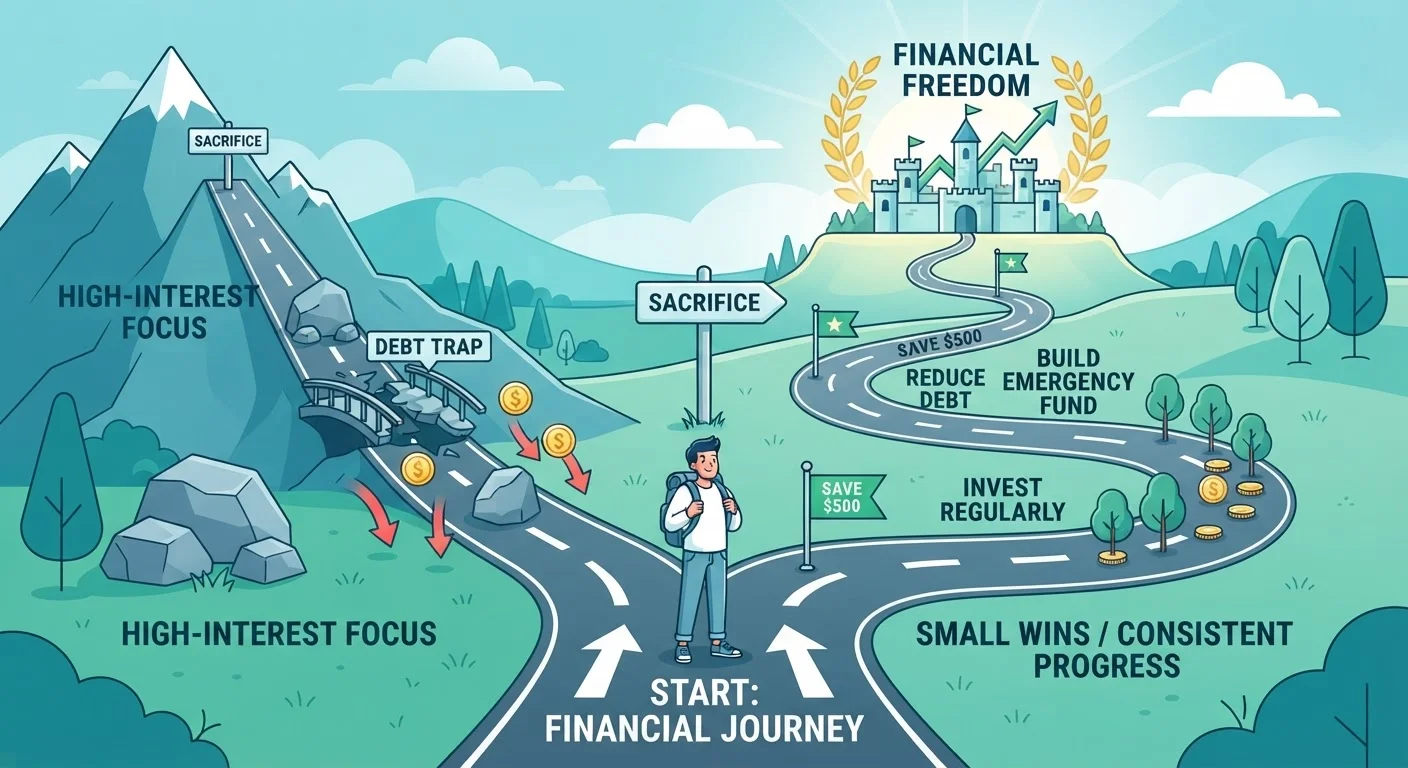
Photo credit: ResultsRover.com | Insights You Can Trust
In this article
Understand how the debt avalanche and debt snowball methods work, what sets them apart, and which approach may suit your financial situation.
Key Takeaways
- The debt avalanche targets the highest-interest debt first, reducing total interest paid over time.
- The debt snowball targets the smallest balance first, generating motivational momentum through quick wins.
- Neither method works without consistent extra payments above the minimum required each month.
- Choosing the right strategy depends on your financial profile and behavioral tendencies, not just the math.
- Both methods require a clear picture of all your debts — balances, interest rates, and minimum payments.
How Each Method Actually Works
Both strategies share a core mechanic: pay the minimums on every debt, then direct any extra money toward one target debt at a time. The difference is how you choose that target.
Debt Avalanche: List your debts by interest rate, highest to lowest. Every extra dollar goes to the highest-rate balance until it's eliminated, then you redirect that payment to the next-highest-rate debt. This is sometimes called the "highest-interest-first" method.
Debt Snowball: List your debts by balance, smallest to largest, ignoring interest rates. You attack the smallest balance first. Once it's gone, you roll that freed-up payment into the next smallest. The growing payment amount is the "snowball" effect.
To use either method effectively, you first need a complete inventory of what you owe. That means knowing each account's current balance, annual percentage rate (APR), and minimum monthly payment. The Budgeting Basics hub is a practical starting point if you haven't yet mapped your full financial picture.
| Criterion | Debt Avalanche | Debt Snowball |
|---|---|---|
| Payoff order | Highest interest rate first | Smallest balance first |
| Total interest paid | Lower (mathematically optimal) | Typically higher |
| Time to first payoff | Potentially longer | Faster first win |
| Motivation approach | Interest savings as reward | Account elimination as reward |
| Best candidate | Disciplined, numbers-driven payers | Motivation-dependent payers |
| Complexity | Requires rate comparison | Simple — sort by balance |
The Real-World Difference in Cost and Time
The avalanche method is mathematically superior in nearly every scenario. By eliminating high-interest debt first, you slow the rate at which new interest accumulates across your remaining balances. Over time, this can mean paying hundreds or even thousands of dollars less — though the exact difference depends on your specific balances and rates.
The snowball method may take longer and cost more in total interest, but research published in the Journal of Marketing Research has found that focusing on the number of accounts eliminated — rather than the dollar amount — can increase a person's likelihood of sticking with a repayment plan. A strategy you follow through on beats a perfect plan you abandon.
~$1,000+
Potential interest savings with avalanche method
The exact savings vary widely by balance size and rate spread, but NerdWallet illustrations show avalanche can outperform snowball by hundreds to over a thousand dollars on typical multi-debt scenarios.
77%
Americans carrying some form of debt
According to Experian's 2023 State of Credit report, the vast majority of U.S. consumers carry at least one form of debt, underscoring how common — and consequential — repayment strategy choices are.
This is why some financial counselors suggest a hybrid: start with the snowball to gain momentum, then switch to the avalanche once you feel confident. There's no rule requiring you to pick one and never adjust.
It's also worth noting that neither method alone addresses underlying spending habits. If you're adding new debt while paying off old balances, the math on either approach breaks down. See the psychology behind debt cycles for a deeper look at the behavioral patterns that keep people stuck.
Choosing the Right Method for Your Situation
There's no universal answer. Ask yourself these questions before committing:
- How far apart are your balances? If your debts are all roughly similar in size, the snowball and avalanche may converge quickly — making the math less decisive.
- What are your interest rates? If you're carrying a credit card at 24% APR alongside a personal loan at 8%, the avalanche case is strong. A few percentage points' difference may make motivation the bigger factor.
- How have past attempts gone? If you've started repayment plans before and abandoned them, the snowball's quick wins might be the more pragmatic choice.
If you receive a tax refund, bonus, or other windfall, the lump-sum windfalls guide can help you think through whether to direct it toward debt or a savings cushion first. And if your income fluctuates month to month, strategies for variable-income debt repayment addresses how to adapt either approach to an unpredictable paycheck.
One alternative worth knowing about: debt consolidation, which combines multiple debts into a single loan, often at a lower rate. It's a different mechanism than the avalanche or snowball, and has its own trade-offs. The debt consolidation explainer walks through when it makes sense — and when to be cautious.
This article is for general informational purposes only and does not constitute personalized financial or legal advice. Consider consulting a licensed financial professional about your specific situation.

Author
Personal Finance Editorial Team
Personal Finance Editorial Team is the collective byline for our editorial team and contributor network. Articles published under this byline or an editorial pen name are researched, written, and reviewed according to our editorial standards for clarity, consistency, and independence before publication.
View all articles →