
The 50/30/20 Rule: A Plain-English Breakdown
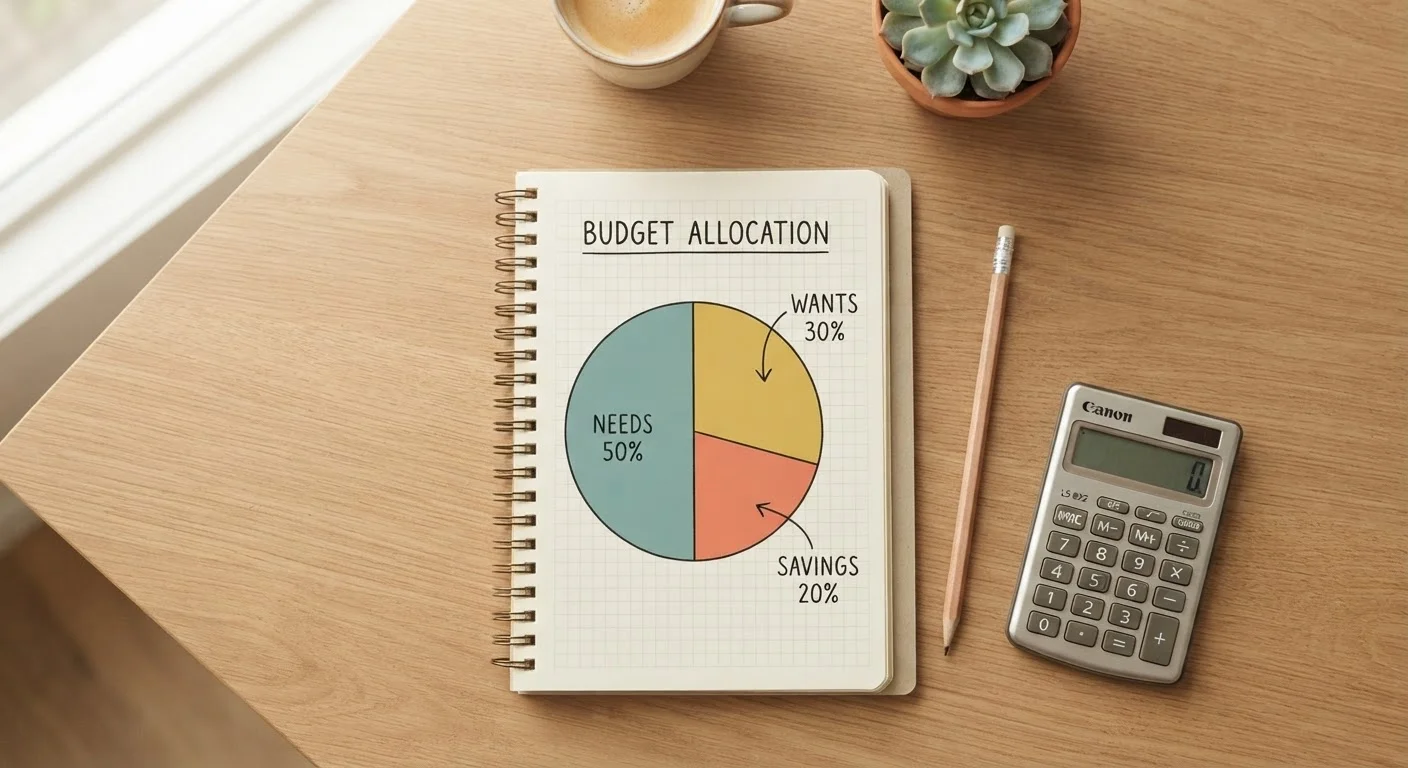
Photo credit: ResultsRover.com | Insights You Can Trust
In this article
The 50/30/20 rule divides income into needs, wants, and savings. Here's how it works, where it helps, and when it falls short.
Key Takeaways
- The 50/30/20 rule splits after-tax income into needs, wants, and savings/debt repayment.
- It's a guideline, not a law — adjusting the percentages for your situation is expected and often necessary.
- The 20% savings bucket should cover both an emergency fund and long-term goals like retirement.
- High-cost-of-living areas often make the 50% needs cap difficult to achieve without modifications.
- The rule works best as a starting point; a monthly review helps you stay on track.
How the Three Buckets Work
Split your monthly take-home pay into three groups — and only three. That simplicity is the whole point.
- 50% — Needs: Rent or mortgage, utilities, groceries, health insurance premiums, minimum loan payments, and transportation costs you can't avoid. These are non-negotiables.
- 30% — Wants: Restaurants, streaming services, vacations, new clothes beyond the basics, hobbies. These improve your quality of life but could be cut if needed.
- 20% — Savings & Debt Repayment: Emergency fund contributions, retirement account deposits, and any extra payments on debt beyond the required minimums.
On a $4,500 monthly take-home, that's $2,250 for needs, $1,350 for wants, and $900 toward financial goals. The math is intentionally quick — the framework is designed to reduce friction, not maximize precision.
34%
Average share of income spent on housing
According to Bureau of Labor Statistics Consumer Expenditure Survey data, housing routinely exceeds the 50/30/20 rule's implied housing sub-limit for many American households.
57%
Americans living paycheck to paycheck
A 2023 LendingClub report found a majority of U.S. consumers report little to no financial cushion, underscoring why a structured savings target matters.
20%
Recommended savings and debt-repayment rate
The 50/30/20 framework aligns with general financial planning guidance that households should direct at least 15–20% of income toward long-term financial security.
Where the Rule Works Well — and Where It Strains
The 50/30/20 rule is best suited to middle-income earners with relatively stable expenses. If your take-home pay comfortably covers rent and groceries with room to spare, the framework clicks into place almost naturally.
It strains under three common conditions:
- High housing costs: In cities where rent alone can consume 40% of take-home pay, staying under 50% for all needs is arithmetic impossibility. The practical fix is to shrink the wants bucket temporarily rather than abandon the framework entirely.
- Lower incomes: When most of your paycheck goes to essentials, the 30% wants allocation feels like a luxury. In these cases, even a 70/10/20 or 80/5/15 split preserves the core idea: protect the savings percentage as much as possible.
- Aggressive debt payoff goals: If you're targeting high-interest credit card debt, you may want to redirect part of the wants bucket toward debt repayment, effectively running a 50/10/40 split until the balance is gone.
Automate Before You Adjust
Set up an automatic transfer to savings on the day your paycheck arrives — even a small fixed amount. Automating the 20% bucket first means you're building the habit regardless of how the other categories shake out that month. You can always fine-tune the wants and needs split later.
For a data-informed look at how American households actually allocate spending across income levels, the Bureau of Labor Statistics consumer data overview offers useful context.
Putting It Into Practice
The rule's value comes from consistent application, not a one-time calculation. Here's a straightforward way to start:
- Calculate your actual take-home pay. Use your net deposit amount, not your salary figure.
- List your fixed monthly needs. Rent, insurance, loan minimums, utilities. Add them up — this is your needs baseline.
- Identify your wants spending. Review last month's bank and card statements. Categorize anything discretionary.
- Confirm your 20% is protected. Automate a savings or retirement transfer on payday so the money moves before you can spend it.
At the start of each month, a quick review keeps things honest. The Monthly Budget Reset Checklist is a practical tool for that recurring check-in.
“A budget is telling your money where to go instead of wondering where it went.”
— John C. Maxwell, Author and leadership speaker, widely quoted on personal development and financial habits
If you're new to budgeting entirely, the seven-step first budget guide walks through the setup process before you apply any percentage framework. And if you want to weigh this approach against a more detailed method, Zero-Based Budgeting vs. the 50/30/20 Rule lays out both side by side.
This article is for general informational purposes only and does not constitute personalized financial advice. Consider speaking with a licensed financial professional about decisions specific to your situation.
Frequently Asked Questions

Author
Personal Finance Editorial Team
Personal Finance Editorial Team is the collective byline for our editorial team and contributor network. Articles published under this byline or an editorial pen name are researched, written, and reviewed according to our editorial standards for clarity, consistency, and independence before publication.
View all articles →