
Why Your Tomatoes Keep Cracking Before You Can Pick Them
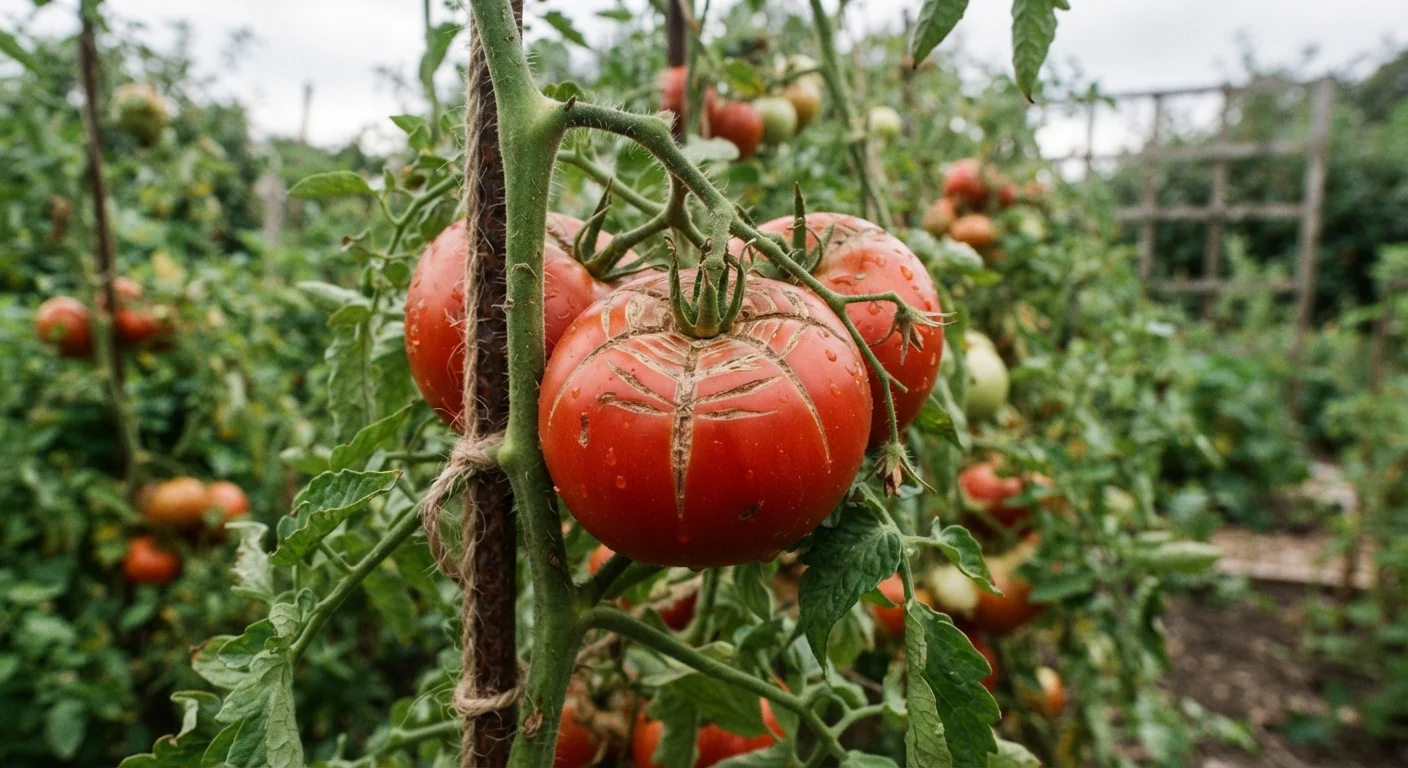
Photo credit: ResultsRover.com | Insights You Can Trust
In this article
Tomato skin cracking is a common frustration with a fixable cause. Learn what triggers it and how to keep fruit intact through harvest.
Key Takeaways
- Inconsistent watering is the leading cause of tomato skin cracking in home gardens.
- Sudden heavy rain after a dry spell causes rapid fruit expansion that splits the skin.
- Mulching and a steady watering schedule dramatically reduce cracking risk.
- Some tomato varieties are naturally more crack-resistant and worth selecting at planting time.
- Harvesting tomatoes slightly early during rainy stretches can save your crop.
What's Actually Causing the Cracks
Tomato cracking happens when the fruit's interior expands faster than its skin can stretch. The skin — already toughened by weeks of sun exposure — simply splits under the pressure. There are two crack patterns: radial cracks run from the stem downward, and concentric cracks form rings around the blossom end. Radial cracks are typically caused by sudden moisture surges; concentric ones often follow temperature swings or high humidity.
The root cause in almost every case is fluctuating water availability. When a plant goes through a dry period and then receives a large dose of water — whether from irrigation or a heavy rainstorm — the fruit absorbs moisture rapidly and the interior pulp swells before the outer skin can keep pace.
~1–2"
Recommended weekly water per tomato plant
University cooperative extension programs consistently cite one to two inches per week as the target for consistent tomato moisture management.
2–3"
Mulch depth shown to stabilize soil moisture
Research from land-grant university extension programs indicates that two to three inches of organic mulch meaningfully reduces soil moisture fluctuation between watering events.
Mistakes That Make Cracking Worse
Even experienced gardeners repeat a handful of habits that set tomatoes up to crack. Recognizing them is the first step to fixing them.
Watering only when the soil looks dry on the surface rather than checking a few inches down.
Why it happens: Surface soil dries out quickly in summer heat, making the plant look thirsty even when deeper roots still have moisture — or vice versa.
Leaving tomatoes on the vine through prolonged rainy periods hoping for a bigger harvest.
Why it happens: Gardeners naturally want to maximize size and flavor, and it feels premature to pick fruit that isn't fully red yet.
Skipping mulch because the garden looks tidier without it.
Why it happens: Bare soil around plants is a common aesthetic preference, and many gardeners don't connect mulch directly to fruit quality.
Planting crack-prone heirloom varieties in climates with unpredictable summer rainfall.
Why it happens: Many heirloom varieties are chosen for flavor without considering that their thin skins make them far more vulnerable to moisture swings.
Practical Steps to Keep Fruit Intact
Once you understand what triggers cracking, prevention becomes straightforward. These strategies work together — combining them gives far better results than relying on any single fix.
- Apply 2–3 inches of mulch around each plant. Straw, shredded leaves, or wood chips buffer soil moisture, keeping it from swinging between soaked and bone-dry after every rain or watering session.
- Water deeply and consistently. Aim for about one to two inches per week, delivered slowly at the root zone. Drip irrigation or soaker hoses are more effective than overhead watering for maintaining even soil moisture.
- Pick tomatoes at first blush. Once a tomato shows color change — even just a blush of pink or orange — it will ripen fully indoors on a countertop at room temperature. Harvesting slightly early during a wet stretch eliminates the window when cracking most often occurs.
- Prune for airflow. Dense foliage traps humidity around the fruit, which contributes to concentric cracking. Remove suckers selectively to keep air moving through the plant.
Don't Compensate for Dry Spells With One Big Watering
It's tempting to give plants a deep soaking after a hot, dry week — but a sudden flood of water is precisely what triggers radial cracking. If you've missed several days of watering, rehydrate gradually over two or more sessions rather than all at once. This gives the soil and the fruit time to absorb moisture without the rapid internal pressure spike that splits skins.
Choosing crack-resistant varieties at the start of the season is the highest-leverage decision you can make. Ask your local cooperative extension office or garden center which varieties perform well in your specific region's rainfall patterns — recommendations vary considerably by climate.

Author
Home & Garden Editorial Team
Home & Garden Editorial Team is the collective byline for our editorial team and contributor network. Articles published under this byline or an editorial pen name are researched, written, and reviewed according to our editorial standards for clarity, consistency, and independence before publication.
View all articles →