
Smoke and Carbon Monoxide Detectors: A Reference Guide for Safe Placement
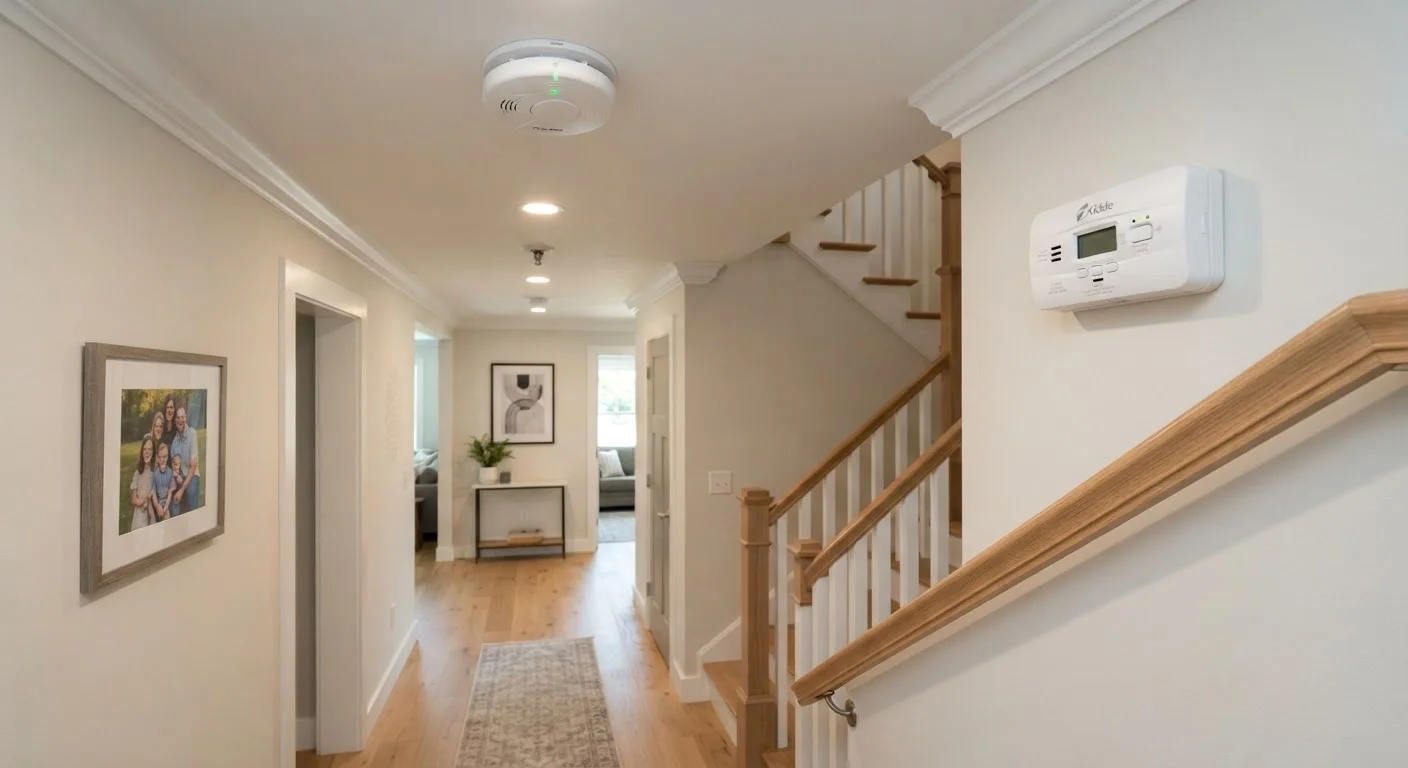
Photo credit: ResultsRover.com | Insights You Can Trust
In this article
Code requirements, recommended placement heights, testing intervals, and battery replacement schedules for residential safety detectors.
Why Placement and Maintenance Matter
Smoke and carbon monoxide (CO) detectors save lives - but only when they are correctly placed and properly maintained. A detector installed in the wrong spot, or one running on a dead battery, offers little real protection. This guide gives you the key facts on placement heights, code requirements, and upkeep schedules so you can keep your household safe without guesswork.
| Smoke detector ceiling clearance | At least 4 inches from any wall (NFPA 72) |
| Smoke detector wall-mount height | 4-12 inches from the ceiling (NFPA 72) |
| CO detector recommended height | Approximately 5 feet from the floor (or ceiling per manufacturer) (NFPA 720) |
| Monthly testing frequency | At least once per month (NFPA 72) |
| Smoke detector replacement interval | Every 10 years from manufacture date (NFPA 72) |
| CO detector replacement interval | Every 5-7 years (Manufacturer guidance / NFPA 720) |
| Standard battery replacement | At least once a year |
This article provides general home safety information for educational purposes. Always verify requirements with your local building department and consult a licensed electrician for hardwired installations.
Recommended Placement by Detector Type
Smoke Detectors
Smoke rises, so smoke detectors belong on ceilings or high on walls. The NFPA recommends the following locations:
- Inside every bedroom and sleeping area.
- Outside each sleeping area on the path to the bedroom.
- On every level of the home, including the basement.
For ceiling-mounted units, position the detector at least 4 inches from any wall. For wall-mounted units, mount between 4 and 12 inches from the ceiling. Avoid placing smoke detectors within 10 feet of cooking appliances to reduce false alarms, and keep them away from bathrooms, garages, and very dusty or humid areas.
Carbon Monoxide Detectors
CO gas disperses fairly evenly in air, so CO detectors can be mounted at roughly the same height as an electrical outlet - approximately knee to shoulder height (roughly 5 feet from the floor) - though ceiling placement is also acceptable per many manufacturers. Install CO detectors:
- On every level of the home, including the basement.
- Near every sleeping area so the alarm can wake occupants.
- At least 15 feet away from fuel-burning appliances such as furnaces, water heaters, and gas ranges to avoid nuisance alarms during normal appliance start-up.
Never install CO detectors in garages, kitchens, or anywhere near direct exposure to exhaust fumes.
Interconnected detectors
A system of smoke or CO detectors wired or wirelessly linked so that when one unit triggers an alarm, all units in the home sound simultaneously. This ensures occupants in remote areas of the house are alerted immediately.
Hardwired detector
A detector permanently connected to the home's electrical supply rather than relying solely on batteries. Most hardwired models also include a battery backup to remain operational during a power outage.
NFPA 72
The National Fire Alarm and Signaling Code published by the National Fire Protection Association. It establishes minimum standards for the installation, testing, and maintenance of fire alarm systems, including residential smoke detectors.
Carbon monoxide (CO)
An odorless, colorless gas produced by incomplete combustion of fuels such as natural gas, propane, oil, wood, and gasoline. Exposure can be life-threatening, making detector placement and maintenance critical.
Sealed lithium battery
A long-life battery built into some detector models designed to power the unit for approximately 10 years without replacement. When the battery reaches end of life, the entire detector unit is replaced.
Testing, Battery Replacement, and Detector Lifespan
Testing Schedule
Press the test button on every smoke and CO detector at least once a month. A steady, loud alarm tone confirms the device is functioning. Make this a household habit - linking it to a recurring calendar reminder takes less than a minute to set up.
Battery Replacement
- Standard 9-volt or AA battery models: Replace batteries at least once a year, or immediately when the low-battery chirp sounds. Many homeowners use a seasonal reminder - changing clocks for daylight saving time is a common cue.
- Sealed 10-year lithium battery models: No routine battery replacement needed; replace the entire unit when it reaches end of life or alarms continuously.
- Hardwired detectors: These use the home's electrical supply with a battery backup. Replace the backup battery annually just as you would a standalone unit.
Detector Lifespan
Sensors degrade over time regardless of whether the device still beeps during a test. General replacement timelines to follow:
- Smoke detectors: Replace every 10 years from the manufacture date (printed on the back of the unit).
- Carbon monoxide detectors: Replace every 5 to 7 years, depending on the manufacturer's guidance stamped on the unit.
Combination smoke/CO units follow the shorter of the two replacement windows - typically 5 to 7 years.
Code Requirements and Interconnection
Local building codes vary, but most jurisdictions in the U.S. have adopted requirements based on NFPA 72 (National Fire Alarm and Signaling Code) and, for CO detectors, NFPA 720. Key points:
- New construction and major renovations in most states require hardwired, interconnected smoke detectors so that when one alarm sounds, all alarms in the home sound simultaneously.
- Many states and municipalities now require CO detectors in all homes with gas appliances, attached garages, or fuel-burning heating systems.
- Requirements for rental properties and multi-family housing are often more stringent - landlords should verify current local ordinances.
Wireless interconnected detectors are an increasingly accessible option for existing homes where running new wiring is impractical. Always check with your local building or fire department before purchasing a system to confirm what is required and whether permits are needed for installation work.
Interconnection Is Required in New Construction
Most U.S. states now mandate that smoke detectors in newly built homes be hardwired and interconnected - meaning an alarm in the basement triggers every detector in the house. If you are remodeling or adding detectors, check with your local building department about permit and interconnection requirements before beginning any electrical work. Wireless interconnected systems may be a code-compliant alternative where running new wiring is not feasible.
Keeping a simple home safety log - noting each detector's location, install date, last test date, and battery change - takes minutes to create and makes compliance checks and future replacements straightforward.

Author
Home & Garden Editorial Team
Home & Garden Editorial Team is the collective byline for our editorial team and contributor network. Articles published under this byline or an editorial pen name are researched, written, and reviewed according to our editorial standards for clarity, consistency, and independence before publication.
View all articles →