
The Fitness Concepts Every Beginner Should Understand Before Starting
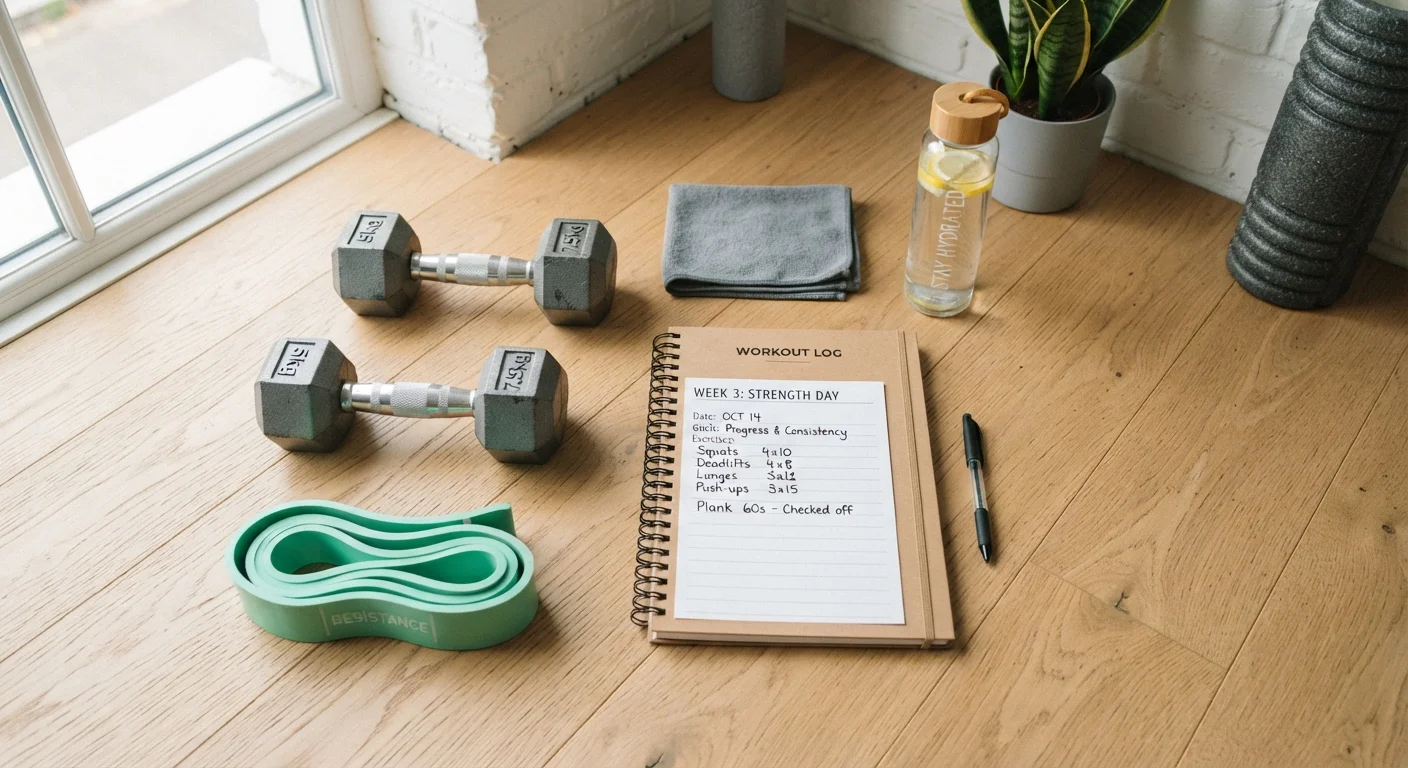
Photo credit: ResultsRover.com | Insights You Can Trust
In this article
Reps, sets, progressive overload, rest days — decoded. A plain-language guide to the building blocks of any fitness routine.
Key Takeaways
- Reps, sets, and volume are the basic units of any strength or conditioning workout.
- Progressive overload - gradually increasing challenge over time - is what drives fitness improvement.
- Rest days are a built-in part of training, not a sign of weakness or laziness.
- Starting simple and consistent matters far more than starting perfectly.
- Understanding key terms helps beginners make better decisions and avoid common early mistakes.
Why Vocabulary Matters Before You Move
Walking into a gym - or opening a workout app - for the first time can feel like landing in a foreign country. Words like superset, HIIT, periodization, and macros get thrown around as if everyone already knows them. They don't have to intimidate you.
Learning a small core vocabulary before you start does two things: it helps you follow instructions accurately, and it helps you recognize when a program is asking too much too soon. Most early fitness dropouts aren't caused by lack of motivation - they stem from confusion and unrealistic expectations. See our breakdown of why routines collapse early for patterns worth knowing before you begin.
Before diving into the vocabulary, check this readiness checklist to make sure you're set up for a safe start.
Repetition (rep)
One complete execution of a single exercise movement, such as one squat or one bicep curl.
Set
A group of consecutive repetitions performed without a rest break. For example, 10 reps done back-to-back equals one set.
Progressive overload
The principle of gradually increasing the difficulty of your workouts over time so the body continues to adapt and improve.
Volume
The total amount of work in a workout session, typically measured by multiplying sets, reps, and weight lifted.
Active recovery
Low-intensity physical activity on rest days - like walking or gentle stretching - that helps muscles recover without adding significant training stress.
Plateau
A point where progress stalls because the body has fully adapted to a given level of exercise challenge and is no longer receiving a new stimulus.
Reps, Sets, and Volume Explained
These three terms are the building blocks of almost every structured workout.
- Repetition (rep): One complete movement - one squat, one push-up, one curl.
- Set: A group of consecutive reps performed without stopping. Three sets of ten squats means you do ten squats, rest, repeat twice more.
- Volume: The total amount of work done - usually calculated as sets × reps × weight. Volume is how coaches track how much stress the body is absorbing over time.
Why does this matter for beginners? Because many people either do too little (not enough stimulus to improve) or too much too soon (leading to soreness, fatigue, or injury). Starting with a modest, consistent volume and building from there is far more effective than any single heroic workout.
Track Your Sets and Reps From Day One
Keeping a simple log - even in a notes app - of what you did each session makes it much easier to apply progressive overload deliberately. You can't build on what you can't remember. Even just noting the exercise, sets, reps, and weight takes under two minutes and pays dividends over months.
Progressive Overload: The Engine of Improvement
If there's one concept worth internalizing early, it's progressive overload. It simply means that for your body to keep adapting - getting stronger, more endurance, more mobile - the challenge you give it must gradually increase over time.
This doesn't mean adding weight every single session. Progression can look like:
- Adding one or two more reps to a set
- Reducing rest time between sets
- Improving the control and range of motion in a movement
- Increasing frequency (working out one more day per week)
Without any form of progressive overload, the body reaches a plateau. With too much, too fast, injury risk rises. The goal is a slow, sustainable upward trend - measurable over weeks and months, not days.
Understanding what type of exercise you're doing also shapes how progression works. Different categories of exercise develop different qualities, and overload looks different across aerobic training, strength work, and flexibility practice.
Progression Looks Different for Everyone
There is no universal rate of progression that suits all bodies and all goals. Factors like age, sleep quality, nutrition, stress levels, and training history all influence how quickly someone adapts. Comparing your progress to someone else's - especially online - is rarely useful and often discouraging. Focus on your own trend over time.
Rest, Recovery, and Why They're Not Optional
Rest is where adaptation actually happens. During exercise, muscle fibers are stressed and broken down at the microscopic level. During rest, the body repairs those fibers - and builds them back slightly stronger. Skip recovery, and you interrupt that cycle.
Rest comes in two forms:
- Passive rest: Full days off from structured exercise. These are essential, especially for beginners whose bodies are adapting to new demands.
- Active recovery: Low-intensity movement - a walk, gentle stretching, swimming at an easy pace - that promotes circulation without adding significant stress.
Sleep is the most underrated recovery tool available. Research consistently supports sleep as a critical period for muscle repair, hormone regulation, and mental readiness to train. There's no shortcut around it.
More Is Not Always Better
One of the most common beginner mistakes is interpreting soreness and fatigue as signs of a great workout - and then doing more. Persistent soreness, declining performance, irritability, and trouble sleeping can all be signs of insufficient recovery. If these appear, scaling back and prioritizing rest is often the most productive thing you can do.
Putting It All Together
A beginner-friendly routine is built on a simple framework: choose movements that work your major muscle groups, apply a manageable volume, repeat consistently, and add challenge gradually over time. The specifics - how many days, which exercises, what equipment - matter less than the habit of showing up regularly.
Fitness is not a destination reached in a month. It's a practice maintained over years. The concepts covered here - reps, sets, volume, progressive overload, and recovery - are not just beginner concepts. They are the same principles elite athletes and everyday exercisers rely on throughout their lives.
Start with what you understand. Add complexity only when it serves you. And if anything feels unclear or you have health concerns, consult a qualified fitness professional or your healthcare provider before making changes to your activity level.
This article is for general informational and educational purposes only and is not a substitute for professional medical or fitness advice. Always consult a qualified healthcare provider before beginning a new exercise program, particularly if you have a medical condition or injury.
ACSM Physical Activity Guidelines
The American College of Sports Medicine publishes evidence-based guidelines on physical activity recommendations for adults. A reliable reference for understanding how much exercise is generally recommended and why.
CDC Move Your Way Tool
The CDC's Move Your Way resource helps everyday Americans understand how to meet physical activity guidelines with activities that fit their schedule and preferences.
Frequently Asked Questions

Author
Health & Wellness Editorial Team
Health & Wellness Editorial Team is the collective byline for our editorial team and contributor network. Articles published under this byline or an editorial pen name are researched, written, and reviewed according to our editorial standards for clarity, consistency, and independence before publication.
View all articles →