
Making Home Workouts Consistent When Your Living Space Doesn't Cooperate
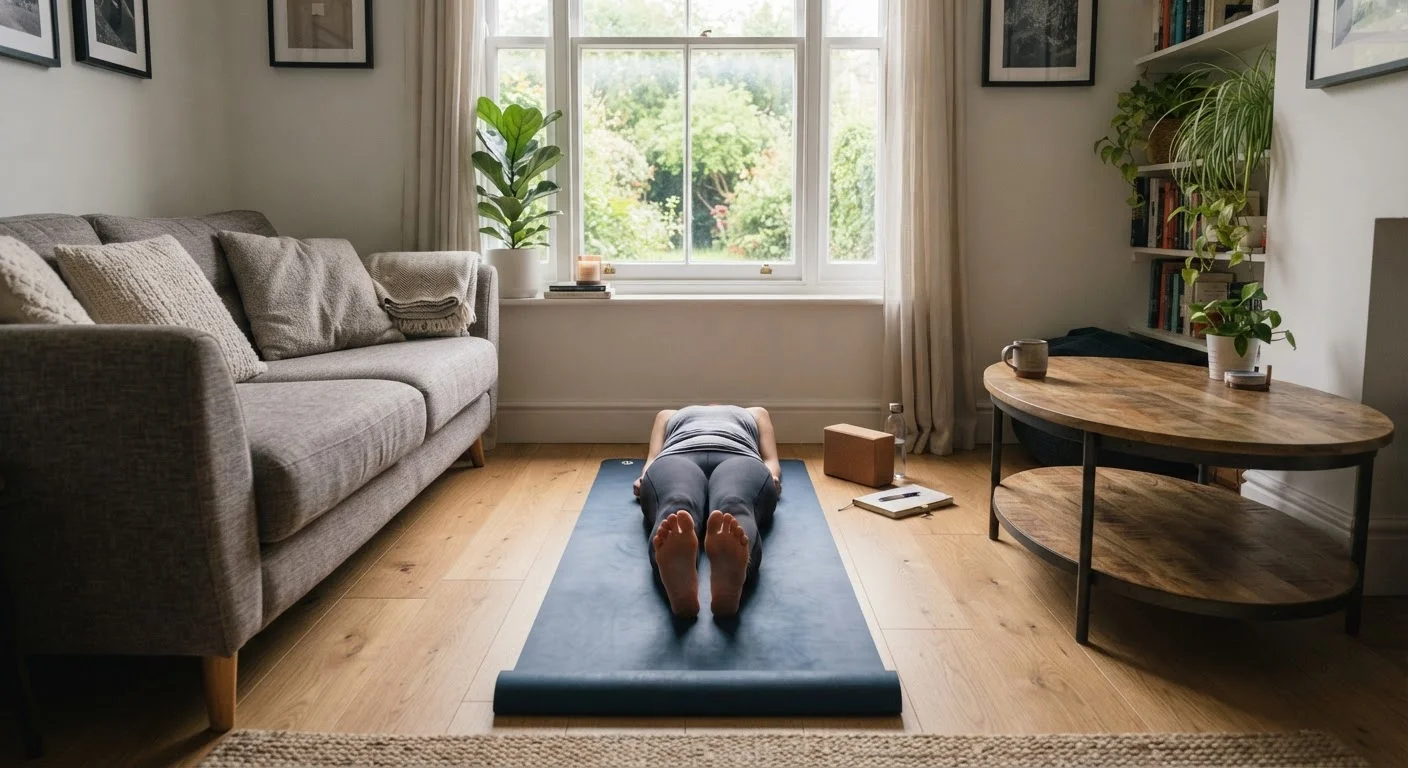
Photo credit: ResultsRover.com | Insights You Can Trust
In this article
Small apartments, shared spaces, and inconsistent schedules all undermine home exercise. Here are realistic ways to make it work anyway.
Key Takeaways
- A consistent home workout habit depends more on removing friction than on having ideal space or equipment.
- Bodyweight exercises and compact routines can deliver real fitness benefits in as little as 6-8 feet of clear floor.
- Scheduling workouts like appointments and anchoring them to existing habits significantly improves follow-through.
- Noise, shared schedules, and clutter are solvable logistical problems, not permanent barriers to exercise.
- Short, frequent sessions are more sustainable than infrequent long ones when home conditions are unpredictable.
Why Home Workouts Fall Apart Before They Start
The pitch for home fitness sounds simple: no commute, no gym fees, no excuses. But anyone who has tried to do lunges in a studio apartment while a roommate cooks dinner knows the reality is messier. The environment itself becomes the excuse.
Research on habit formation consistently shows that environmental cues and friction - the small obstacles between you and a desired behavior - have an outsized effect on whether routines stick. When your living space doubles as your office, your family's gathering place, and your storage unit, there's more friction than most fitness content acknowledges. Understanding that friction is the first step to reducing it.
This isn't about motivation. Most people who abandon home workouts aren't lazy - they're dealing with real logistical complexity. Understanding why routines collapse early can help you design around the specific patterns that derail most people before week four.
Best Practices for Making It Work
The following approaches address the most common real-world barriers: limited space, shared households, noise constraints, and unpredictable schedules. Apply the ones most relevant to your situation.
Define a specific, repeatable workout zone - even a 6-by-6-foot patch of floor.
Having a designated physical space, however small, creates a consistent environmental cue that signals "it's time to move." This reduces the mental overhead of setting up each time, which is one of the most common points where people abandon a session before it begins.
Anchor workouts to an existing daily habit rather than a specific clock time.
Rigid time-based schedules fail when work, family, or sleep patterns shift - which happens constantly. Habit stacking, linking exercise to something you already do reliably, creates a more durable trigger that survives schedule disruptions.
Choose workouts that match your current noise and space reality, not your ideal conditions.
Selecting exercises that require jumping or heavy impact when you live above neighbors - or have sleeping family members - sets you up to skip sessions on most days. Matching your routine to actual constraints means it remains executable on a typical day, not just a perfect one.
Prepare your workout space the night before, not the morning of.
Decision fatigue and time pressure in the moment are two of the biggest predictors of skipped sessions. Removing setup steps in advance - mat out, resistance band visible, phone cued up - dramatically reduces the activation energy needed to start.
Negotiate a household schedule that protects a consistent window for movement.
Shared spaces require coordination, not just personal discipline. A conversation with housemates or family members about a reliable 20-minute window is far more effective than trying to steal time unpredictably - and it reduces the resentment that often builds around exercise routines in shared homes.
Default to shorter, more frequent sessions rather than long workouts when conditions are unreliable.
An all-or-nothing mindset - where a 45-minute session is the goal and anything less "doesn't count" - leads to more missed days than a flexible approach. Research on exercise consistency supports the value of accumulated daily movement, even in shorter bouts.
If conventional workouts feel like a poor fit regardless of environment, movement habits that don't require a traditional routine may offer a more sustainable path.
Quick Wins You Can Act on Today
Long-term consistency is built on small, immediate decisions. The actions below require no equipment purchases, no schedule overhaul, and no extra space - just a commitment to lowering the barrier right now.
~150 min
Weekly moderate activity recommended by federal guidelines
The U.S. Department of Health and Human Services Physical Activity Guidelines for Americans recommend at least 150 minutes of moderate-intensity aerobic activity per week for adults, which can be broken into shorter sessions.
6-8 ft²
Floor space needed for most bodyweight exercises
Most foundational movements - planks, push-ups, squats, and lunges - can be performed in a floor area roughly the size of a yoga mat, making space a smaller barrier than it may feel.
For those returning to exercise after time away, rebuilding safely after a long break requires a slightly different approach than starting from scratch - these quick wins apply to both groups.
This article is for general informational purposes only and does not constitute medical advice. Consult a qualified healthcare professional before beginning any new exercise program, particularly if you have existing health conditions.

Author
Health & Wellness Editorial Team
Health & Wellness Editorial Team is the collective byline for our editorial team and contributor network. Articles published under this byline or an editorial pen name are researched, written, and reviewed according to our editorial standards for clarity, consistency, and independence before publication.
View all articles →