
Hydration Beyond the "Eight Glasses a Day" Rule
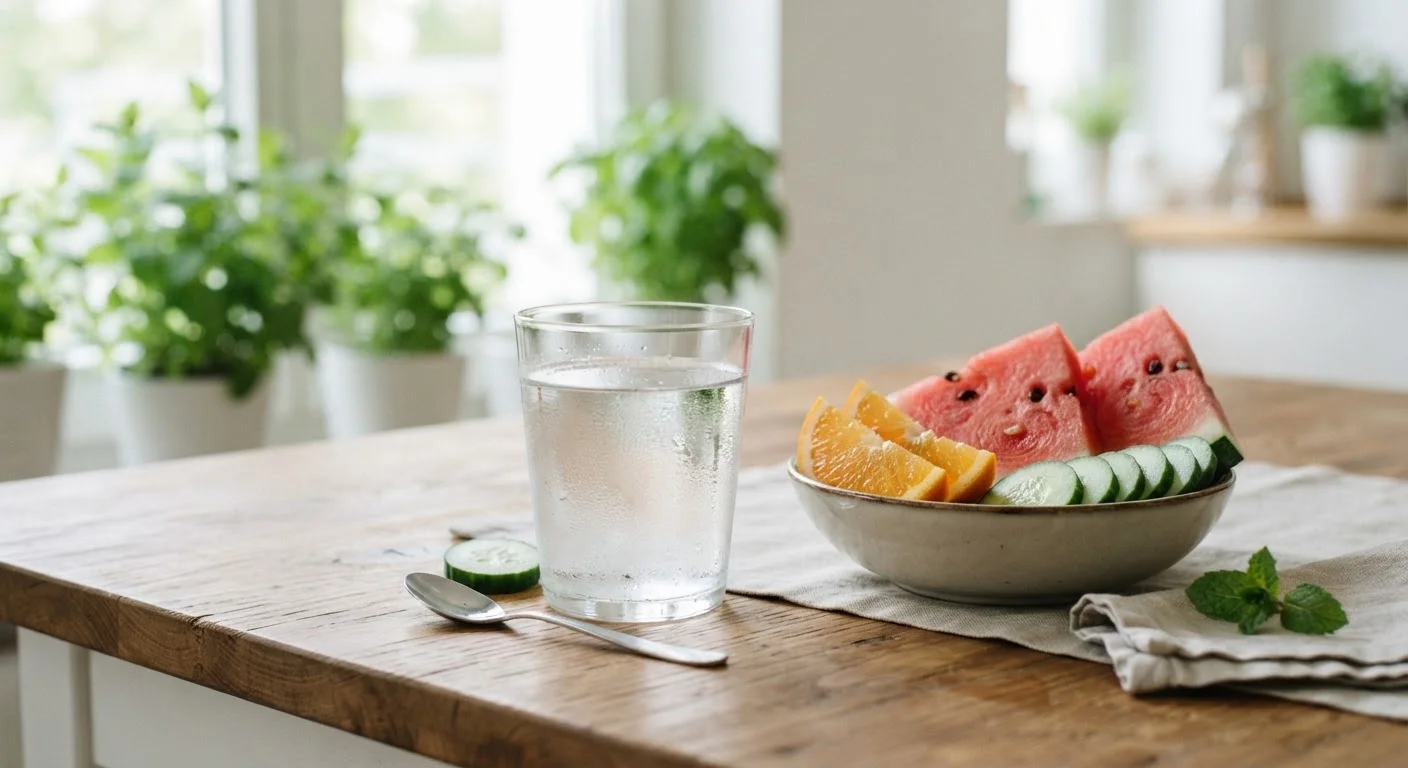
Photo credit: ResultsRover.com | Insights You Can Trust
In this article
Where the eight-glasses guideline came from, why individual needs vary, and the practical signals that tell you if you're drinking enough.
Key Takeaways
- The 'eight glasses a day' rule has no strong scientific basis and doesn't fit everyone.
- Urine color is one of the most practical and accessible indicators of hydration status.
- Food contributes roughly 20% of most people's daily fluid intake.
- Needs increase significantly with exercise, heat, illness, and certain health conditions.
- Thirst is generally a reliable signal in healthy adults, though it can lag behind actual need.
- Consult a healthcare professional if you have a condition that affects fluid balance.
Where the Rule Actually Came From
Ask most Americans how much water they should drink and they'll say eight glasses - eight ounces each, totaling 64 ounces a day. The rule feels authoritative, but its origins are surprisingly thin. A 1945 recommendation from the U.S. Food and Nutrition Board did suggest roughly 2.5 liters of water daily, but crucially it noted that most of that quantity comes from food. That caveat got lost, and a simplified slogan took its place.
Nutritionist Dr. Heinz Valtin examined the '8 x 8' rule in a widely cited 2002 review published in the American Journal of Physiology and found no scientific evidence supporting it as a universal requirement for healthy adults. The rule persists largely because it is easy to remember - not because it reflects individual physiology.
“There is no evidence that healthy adults in a temperate climate need to consume specified amounts of water. The body's thirst mechanism is remarkably accurate for most people under normal conditions.”
— Heinz Valtin, Emeritus Professor of Physiology, Dartmouth Medical School, writing in the American Journal of Physiology (2002)
Why Individual Needs Vary So Much
Fluid needs are shaped by a web of personal factors, which is why a single number can't work for everyone.
- Body size and composition: Larger bodies and people with more lean muscle mass require more water. Muscle tissue holds more fluid than fat tissue.
- Physical activity: Sweat rates vary enormously between individuals. A vigorous workout or manual labor in warm conditions can increase needs by a liter or more.
- Climate and environment: Heat and humidity drive up fluid loss through perspiration. High-altitude environments also increase respiratory water loss.
- Diet: Foods like cucumbers, watermelon, soups, and leafy greens contribute meaningful amounts of water. On average, food accounts for roughly 20% of daily fluid intake.
- Health status: Fever, vomiting, diarrhea, and certain medications or conditions alter fluid balance significantly. Pregnant and breastfeeding individuals have elevated needs.
Use Color as Your Daily Check-In
Keep a simple mental benchmark: aim for pale yellow urine throughout the day. If it's darker, drink a glass of water. This takes seconds and removes the need to count cups. First-morning urine is typically darker - use midday checks for a more accurate picture.
Practical Signals That Tell You Enough
Rather than counting glasses, most healthy adults can rely on a combination of body signals.
Urine Color
The clearest daily indicator is urine color. Pale yellow - roughly the shade of lemonade - signals adequate hydration. Dark yellow or amber suggests a deficit. Completely colorless urine can indicate you're taking in more fluid than needed.
Thirst
Thirst is a reasonable prompt for healthy adults, though it can lag behind real fluid loss during exercise or heat exposure. Older adults should be especially mindful, since the sensation of thirst tends to diminish with age.
Physical Cues
Dry mouth, headache, fatigue, and difficulty concentrating can all be early signs of mild dehydration. These cues aren't definitive on their own, but in context they signal it's time to drink.
~20%
Daily fluid from food, not beverages
According to the U.S. National Academies of Sciences, Engineering, and Medicine, roughly one-fifth of daily fluid intake typically comes from water-containing foods.
3.7 L
Adequate daily fluid intake for adult men
The National Academies set this as the adequate intake for men aged 19 and older, covering all beverage and food sources combined.
2.7 L
Adequate daily fluid intake for adult women
This figure applies to non-pregnant, non-breastfeeding women aged 19 and older, per National Academies guidelines.
This article is for general informational purposes only and does not constitute medical advice. Individuals with health conditions that affect fluid balance - including kidney disease, heart conditions, or those taking diuretic medications - should consult a qualified healthcare professional for personalized guidance.
Frequently Asked Questions

Author
Health & Wellness Editorial Team
Health & Wellness Editorial Team is the collective byline for our editorial team and contributor network. Articles published under this byline or an editorial pen name are researched, written, and reviewed according to our editorial standards for clarity, consistency, and independence before publication.
View all articles →