
How Cooking Methods Change the Nutritional Value of Food
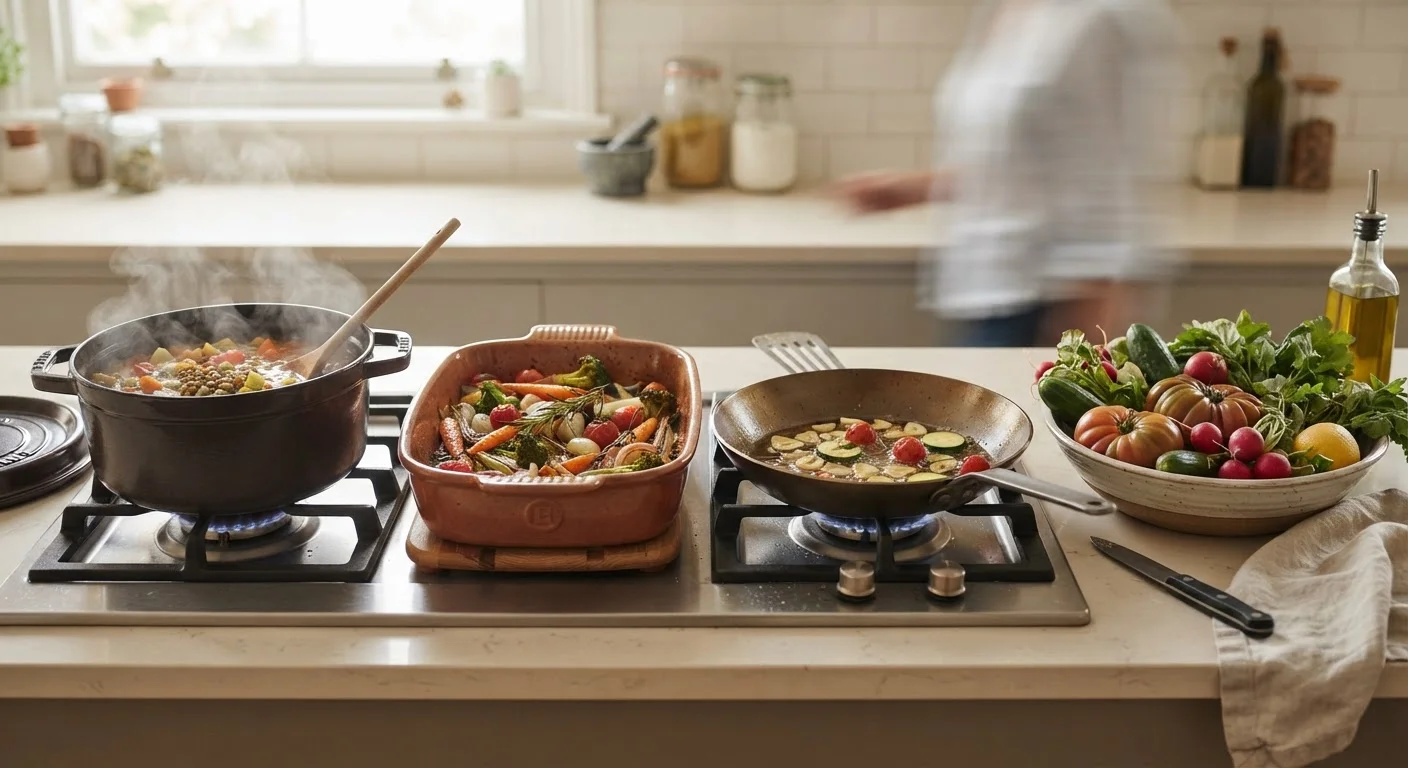
Photo credit: ResultsRover.com | Insights You Can Trust
In this article
Boiling, roasting, steaming, frying — each method affects vitamins, minerals, and fats differently. Here's what research says about the trade-offs.
Key Takeaways
- Water-soluble vitamins like B and C leach into boiling water and are largely lost if the liquid is discarded.
- Steaming preserves more nutrients than boiling while still making food safe and digestible.
- Some nutrients - like lycopene in tomatoes - actually become more bioavailable after cooking.
- High-heat dry methods such as roasting and frying can produce compounds that may affect long-term health.
- No single method is universally superior; matching the technique to the food maximizes nutritional value.
Why Cooking Method Matters Nutritionally
Heat, water, and oxygen all interact with nutrients - and the cooking method you choose determines how much of each is present. Vitamins, minerals, and beneficial plant compounds respond very differently to the same temperature or environment. Understanding these interactions doesn't require a nutrition degree; it requires a few clear principles applied in a real kitchen.
Nutrients generally fall into two categories relevant to cooking: water-soluble (vitamins C and B-complex, folate) and fat-soluble (vitamins A, D, E, and K, plus carotenoids). Water-soluble nutrients leach into cooking liquids easily; fat-soluble ones are relatively stable to heat but need dietary fat present to be absorbed by the body. Minerals like potassium and magnesium can also leach into water, though they are generally more heat-stable than vitamins.
This is especially relevant if you cook a lot of vegetables or legumes - foods that form the backbone of many health-conscious diets. For a deeper look at how plant-forward eating fits into overall nutrition, see our guide to plant-based eating trade-offs.
Comparing Common Cooking Methods
Each method has a distinct nutrient profile based on temperature, duration, and the medium (water, oil, air) involved. The table below summarizes how the most common methods stack up.
| Boiling | Steaming | Roasting | Sautéing | Microwaving | |
|---|---|---|---|---|---|
| Vitamin C retention | Low (leaches into water) | High | Moderate | Moderate-High | High |
| B-vitamin retention | Low-Moderate | Moderate-High | Moderate | Moderate | Moderate-High |
| Mineral retention | Low (leaches out) | Moderate-High | High | High | High |
| Fat-soluble nutrient absorption | Low (no fat) | Low (no fat) | High (with oil) | High (with oil) | Low (no fat) |
| Antinutrient reduction | High | Moderate | Moderate | Low-Moderate | Low |
| Risk of harmful compounds | Very low | Very low | Low-Moderate | Low | Very low |
| Overall convenience | High | Moderate | Moderate | Moderate | Very high |
A few important nuances the table can't fully capture: microwaving, often viewed skeptically, is actually one of the gentler cooking methods for water-soluble vitamins because cook times are short and little or no water is added. Research published in food science literature consistently shows microwave cooking retains more vitamin C in broccoli than boiling does.
Save the Cooking Liquid
When you do boil vegetables, the water contains leached water-soluble vitamins and minerals. Rather than discarding it, use that liquid as a base for soups, sauces, or grains. This simple habit can recover a meaningful portion of the nutrients that would otherwise go down the drain.
When Cooking Actually Improves Nutrition
Heat isn't always the enemy of nutrients - sometimes it's the catalyst that makes them accessible. Lycopene, the antioxidant carotenoid that gives tomatoes their red color, becomes significantly more bioavailable after cooking. Studies have found that processed tomato products deliver more absorbable lycopene than raw tomatoes, largely because heat breaks down the plant cell walls that would otherwise limit absorption.
Similarly, cooking destroys antinutrients - compounds like oxalates in spinach and phytates in legumes and grains that bind to minerals and reduce their absorption. Boiling spinach, for instance, substantially reduces its oxalate content, making the calcium and iron in the leaf more accessible. Soaking and boiling beans reduces phytate levels, improving the overall mineral availability of a meal.
Fat-soluble nutrients also benefit from the presence of oil during cooking. Roasting carrots or sweet potatoes with a small amount of oil can meaningfully increase how much beta-carotene your body converts to vitamin A compared with eating them raw or boiled without fat.
High-Heat Risks Worth Knowing
High-temperature dry-heat methods - grilling, deep frying, and broiling - introduce their own nutritional considerations. When starchy foods are cooked at very high temperatures, a compound called acrylamide can form. Acrylamide has been studied for its potential health implications, and while research in humans is ongoing, major health bodies recommend minimizing the charring of starchy foods as a general precaution.
Deep frying dramatically increases the calorie density of food through fat absorption and can introduce trans fatty acids if oils are reused or overheated. Even when nutrient loss from the food itself is modest, the addition of large amounts of cooking fat changes the overall nutritional profile of a meal significantly.
Avoid Repeatedly Reusing Frying Oil
Reheating cooking oil multiple times degrades it, lowering its smoke point and potentially increasing harmful oxidation products. If you fry occasionally at home, use fresh oil each time and discard used oil responsibly. This applies especially to oils with lower heat stability such as extra-virgin olive oil.
Grilling and broiling proteins can produce heterocyclic amines (HCAs) and polycyclic aromatic hydrocarbons (PAHs) when meat is charred. Marinating meat before grilling and avoiding direct flame contact with fat drippings can reduce - though not eliminate - formation of these compounds, according to the National Cancer Institute.
This article is for general informational purposes only and is not a substitute for advice from a qualified registered dietitian or healthcare professional. Individual nutritional needs vary; consult a professional for personalized guidance.

Author
Health & Wellness Editorial Team
Health & Wellness Editorial Team is the collective byline for our editorial team and contributor network. Articles published under this byline or an editorial pen name are researched, written, and reviewed according to our editorial standards for clarity, consistency, and independence before publication.
View all articles →